
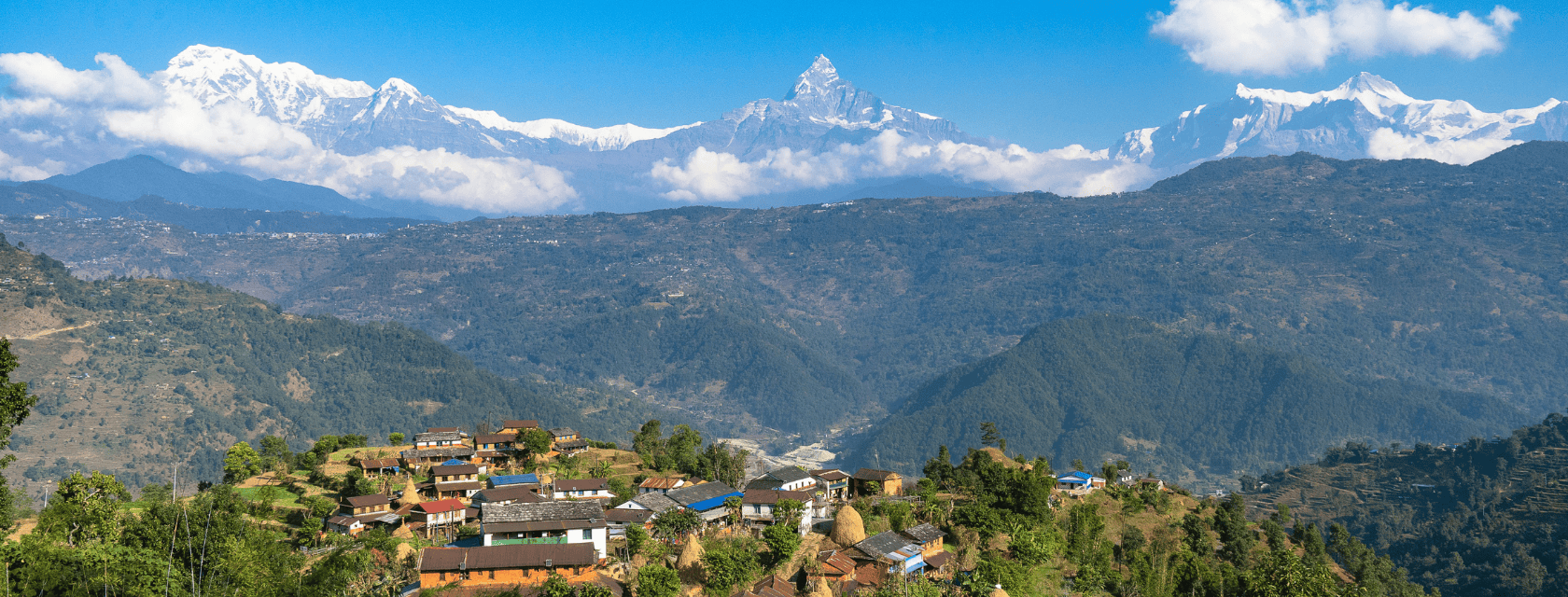
As heavy rain pours down central Nepal, University of Guelph students encounter their first landslide of the trip.
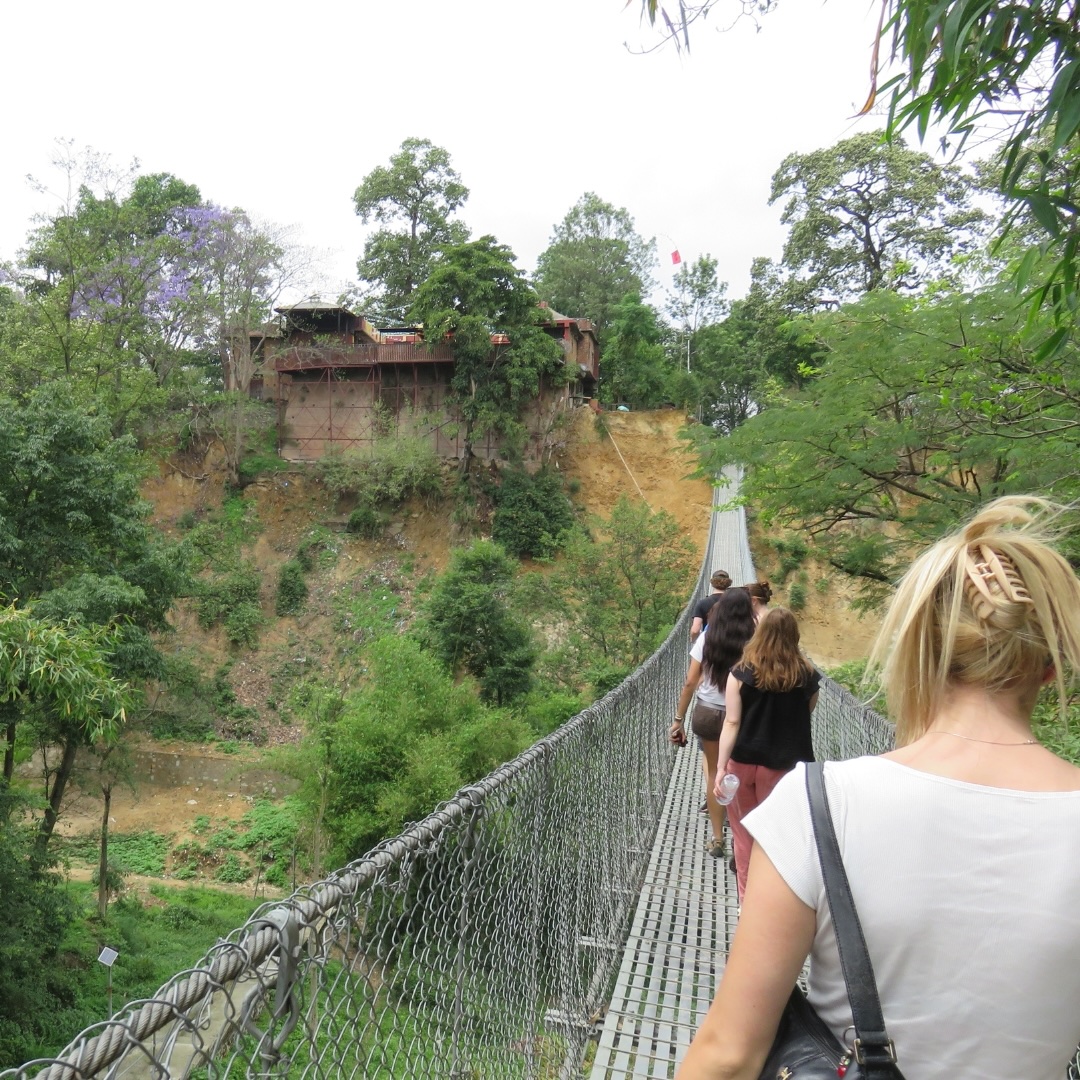
It is early May. Students leap from their trucks and throw rocks off the hillside to clear the path. Later, another landslide blocks the road entirely. They travel the rest of the way – two hours on foot – to the nearest village.
Such are the daily realities of life in remote regions. But as lead instructor Dr. Andrea Paras says, experiencing these challenges firsthand and understanding how local communities respond with resilience and creativity is the entire point of the trip.
“Learning happens in the middle of discomfort,” says Paras, professor in the College of Social and Applied Human Sciences. “Our instinct is to fix it or run from it. But if we can sit with the discomfort, reflect on it — that’s when real learning happens.”
It is a philosophy of experiential learning that drives U of G’s international development studies program and the three-week trip concluding the Nepal Field School.
Designing the program with local organizations, Paras ensures students receive an authentic experience of the country, often far off the tourist trail.
And as students like Elliana Lehman wrap up their time, they describe the field school, open to students from all disciplines, with a clear impact:
“This was one of the most important courses I’ll ever take,” says Lehman.
Experiential learning in Nepal brings theory to life
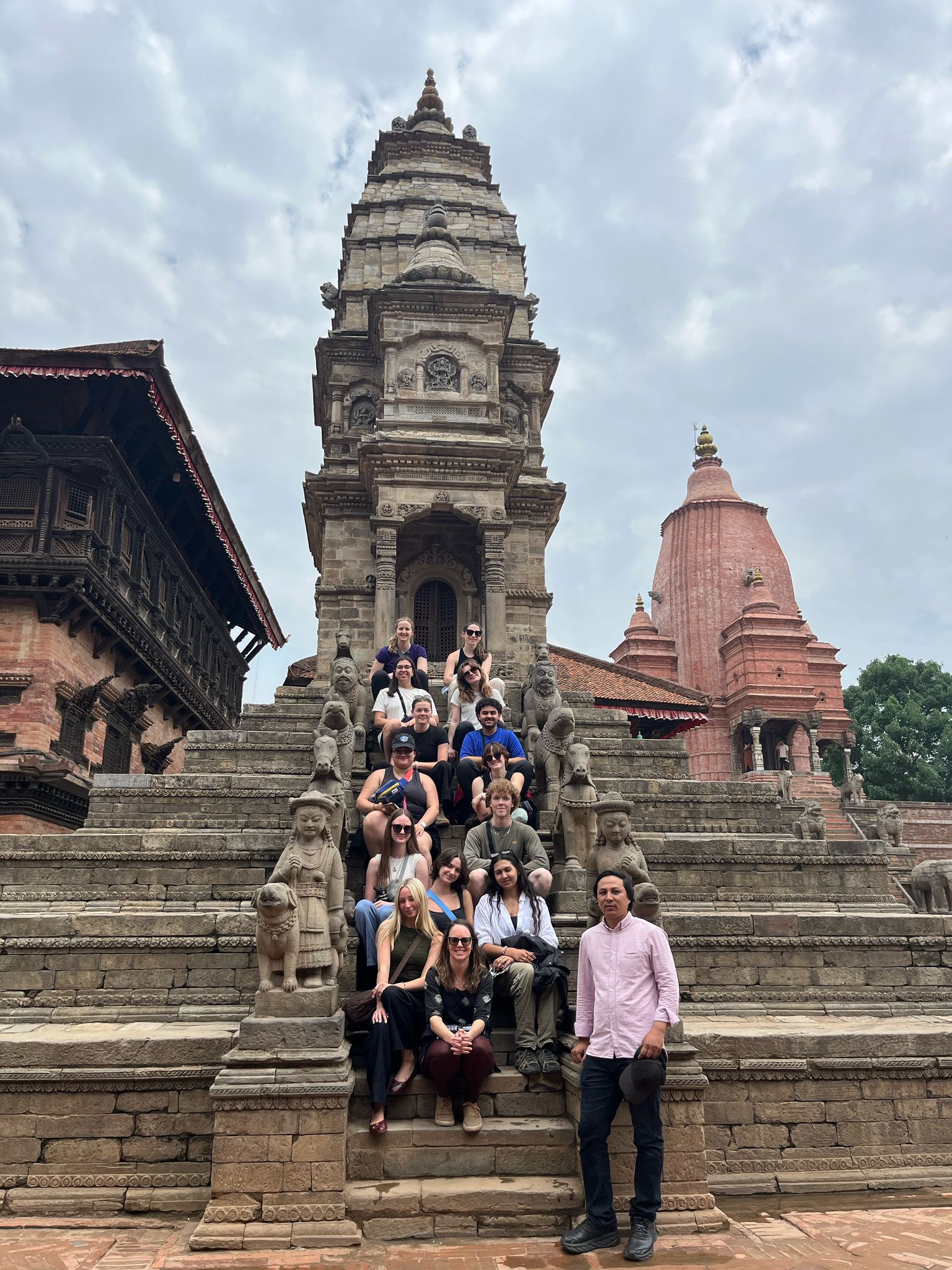
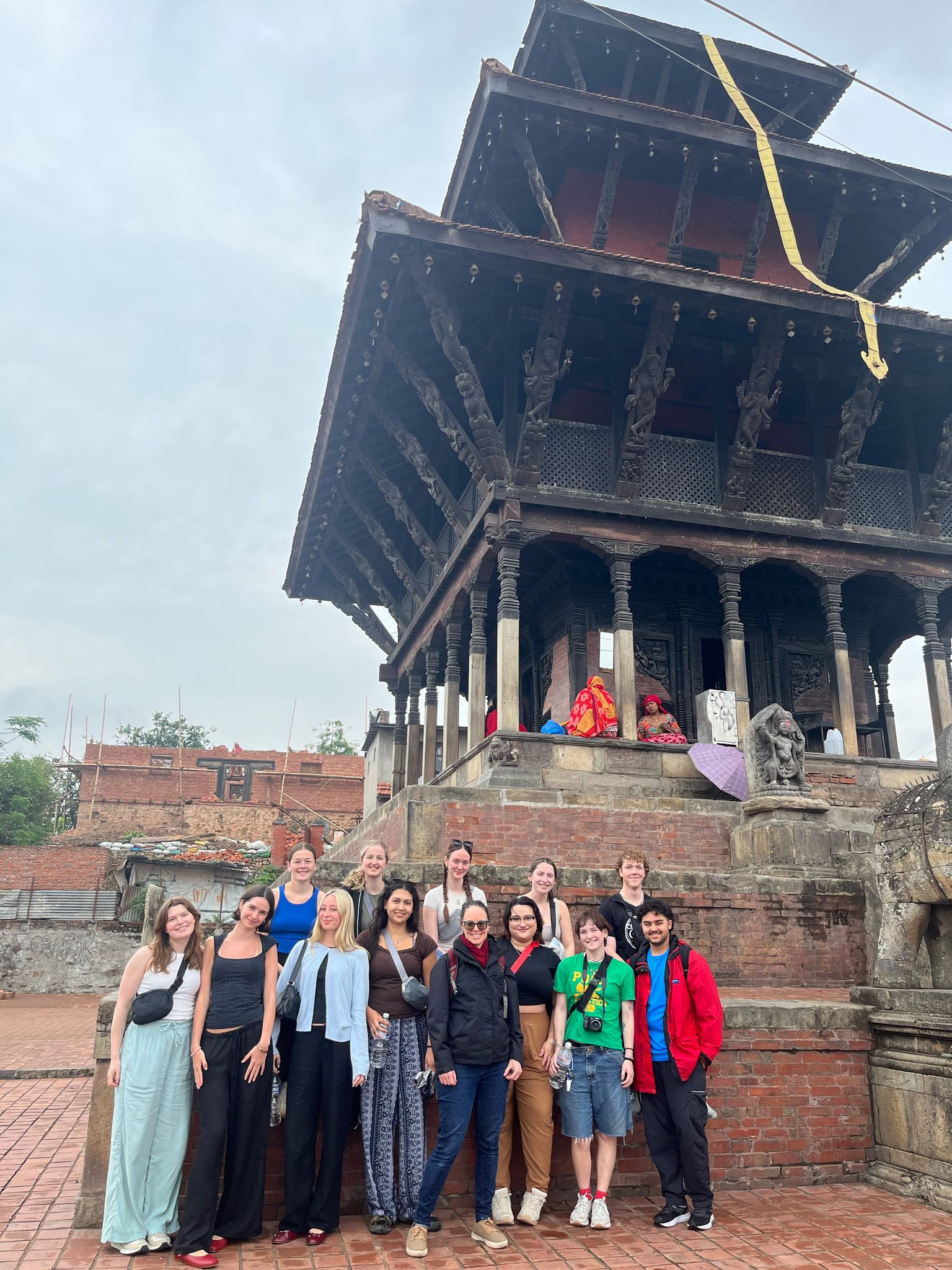
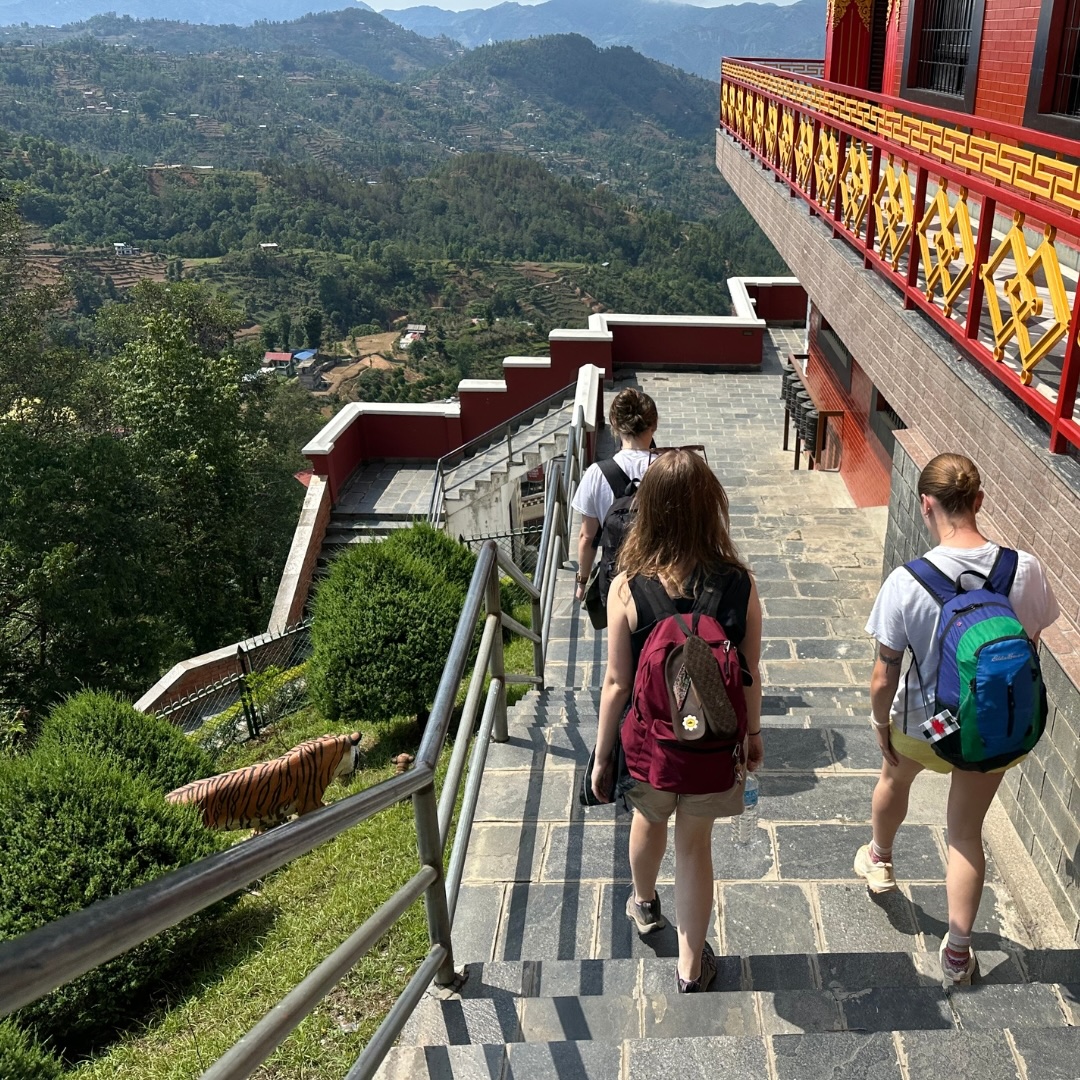
Amid temples, stupas and palaces in Kathmandu Valley, students learn how traditional woodcarving methods, passed down from generation to generation, are being used to rebuild heritage sites damaged by recent earthquakes. They walk along stone pathways lined with Buddhist and Hindu symbolism, and they meet the Kumari: a young girl revered as a living goddess.

But the highlight of the trip, they say, is in Gorkhe, a village in eastern Nepal. There, sprawling tea gardens line the hills. Local Nepalis greet them in traditional dress with bouquets, music and dance.
For four nights, students live in picturesque homestays filled with plants and fresh air. With local families, they immerse themselves in the daily rhythms of rural life — cooking, sharing meals and finding connection through song and conversation.
“We were so lucky to experience rich traditions unlike our own,” says Lehman, a second-year Bachelor of Arts and Sciences student.
“But we also saw tension,” adds Elizabeth Agnew, a fifth-year undergraduate in international development studies. “You can see how the past and present are in conversation, especially in a country still transitioning between political structures.”
Conversing with Nepalis about local history, Agnew learns about the decline of Gorkhe’s market. Decades ago, the government gave the village a difficult choice: roads or electricity. They chose electricity, and as roads and trade routes faded, the once-bustling bazaar slowly disappeared — along with jobs and opportunity.
From local teachers, they learn that students walk up to two hours to get to school, how the majority of them stop attending after grade 10, with only about 20% graduating from high school.
“As development students, we’re so used to the sterilized, classroom-based versions of development,” writes Agnew in her blog post – one of many written pieces of reflection required for the course. “In contrast, hearing directly from the residents of Gorkhe puts development issues into perspective.”
“Brain drain” is one such term learned in lectures. But in Gorkhe, Agnew hears it echoed through Ichchha, her host family’s daughter-in-law, who explains how most young people leave Nepal to work or study abroad, resulting in a dwindling labour force.
“I was grateful that they were willing to discuss such sensitive topics,” Agnew says.
Moments of joy punctuate this learning. Lehman, who’s pursuing a minor in music, is captivated by the village’s soundscape — flutes, drums, laughter — and recalls dancing with children to a blend of traditional and Western music.
“Even without speaking the same language, we could share rhythm and movement,” they say.
‘Nepal is a living classroom’
At every stop, students are asked to slow down and pay attention — not just to what they see, but to how they feel.
In Chitwan National Park, one of Nepal’s most popular tourist destinations, a traditional Tharu cultural show at a luxury resort sparks difficult conversation. Earlier that day, students learned that members of the Indigenous Tharu community were displaced to make way for that very park.
“It felt strange, even unsettling,” Lehman says. “That night, we talked a lot about discomfort. How to hold those conflicting feelings and enjoy the experience while acknowledging what had been lost.”
As Paras teaches, Nepal, nestled between China and India, has long resisted colonization but remains a site of geopolitical competition.
“It is often treated as a buffer zone by global powers,” Paras says. “But it has its own rich history and strategies of resilience. I wanted students to reflect on those complex layers — the historical, the political and the human.”
Birodh Dhakal of Accomplish Holidays, the Nepali destination management company Paras partnered with, adds, “Nepal is a living classroom. To see its beauty, you must come with an open heart and mind.”
He says the value of the program flows both ways.
“Local people get something, too,” he says. “They make friends. They learn about new cultures. They get to represent Nepal in a positive way.”
And when students return home, they feel a quiet transformation.
“I didn’t realize how much I had learned until I got home,” says Lehman. “But I feel changed — in how I understand connection, culture and complexity.”
For Paras, that shift is the school’s greatest success.
“I don’t want students to leave thinking they’ve mastered Nepal,” she says. “I want them to leave more humble, more engaged and more willing to learn from the world — and from their own discomfort.”
To learn more about the experiences of students, visit the Nepal Field School blog.