
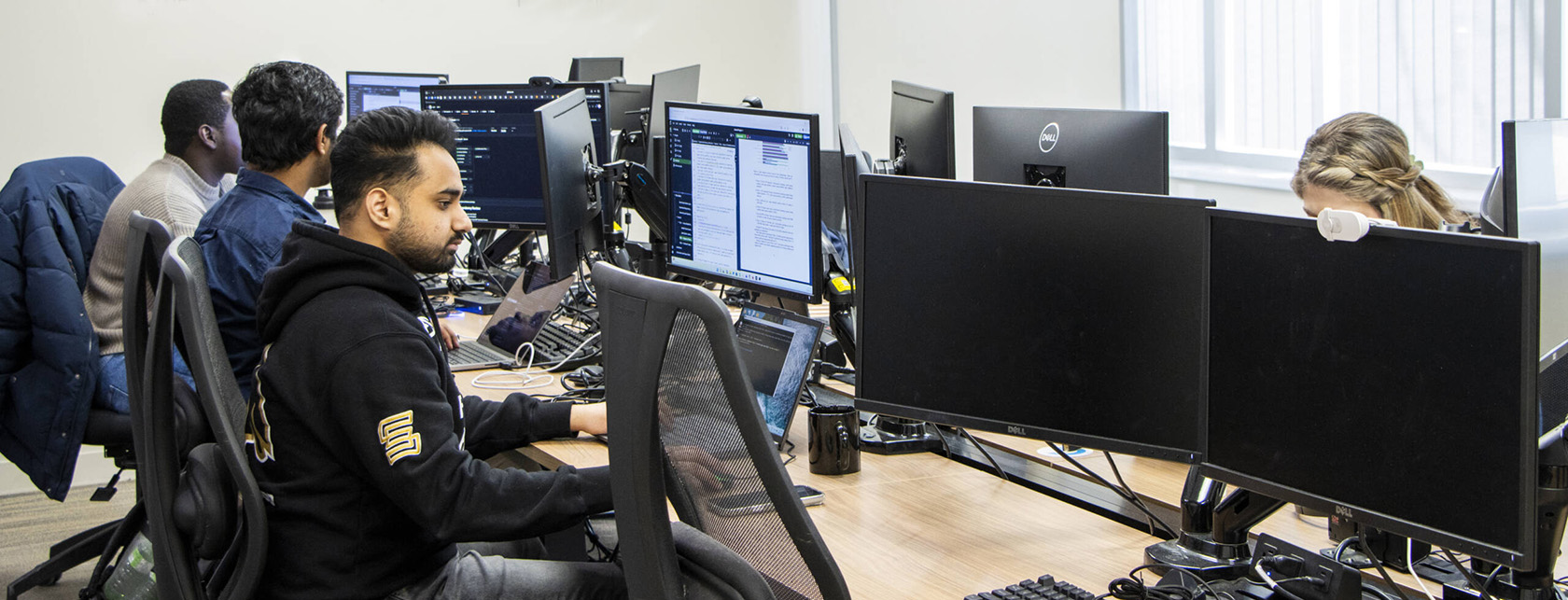
Unique University of Guelph lab filling critical security gaps for Canadian agriculture producers
In 2019, a farmer called cybersecurity professor Dr. Ali Dehghantanha after a strange message popped up on his screen.
“Don’t touch anything,” Dehghantanha, Canada Research Chair in Cybersecurity and Threat Intelligence, warned. “I’m coming over to help.”
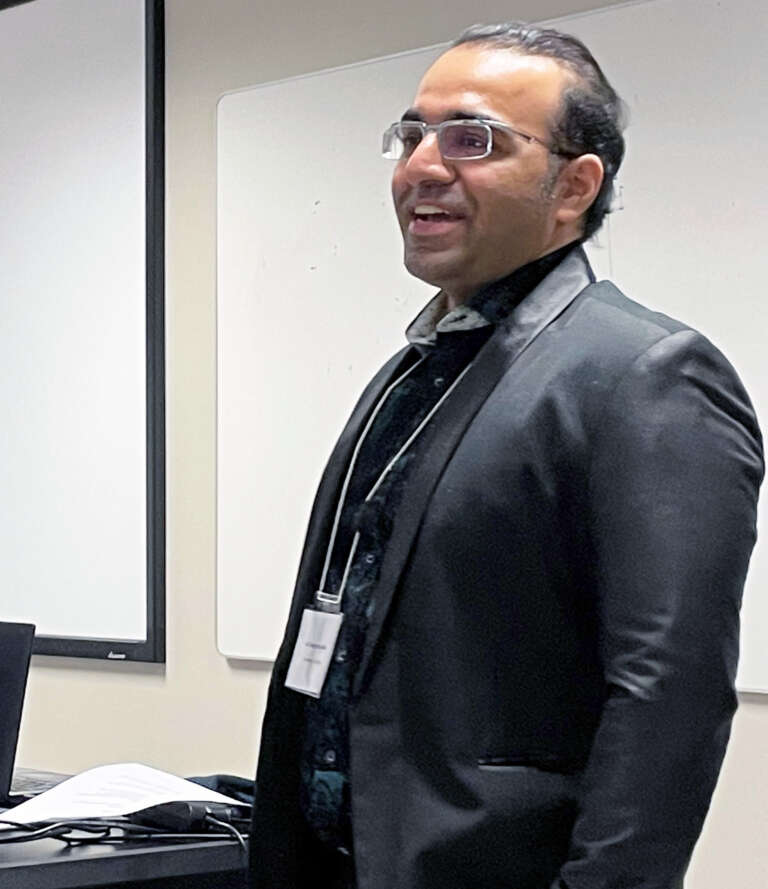
In some industries, a cybersecurity professional has about an hour to prevent significant business damage. Farmers, however, might have just 15 minutes, Dehghantanha has learned.
“We found if we are not responding within that time,” he says, “hackers could cause a power outage in the farm, which could cause livestock to die.”
The farmer had been attacked with ransomware, a hacking that locks files and demands payment to return them. But hackers have threatened worse, reminding Dehghantanha just how vulnerable agricultural systems are. He’s since dealt with out-of-state actors from Russia and China who gain control of power systems and threaten the welfare of chickens, cattle and more.
Profit is one motive for these attacks, but the Canadian Centre for Cyber Security has warned about foreign hackers gaining remote access to food and water infrastructure in order to discredit food producer groups and undermine Canada’s reputation.
To find solutions, the University of Guelph’s Cyber Science Lab (CSL) where Dehghantanha is the founding director, has become the only lab of its kind that tackles cybersecurity in agri-food industries.
“When we talk with farmers, we always hear, ‘No one knows me. I won’t be targeted,’” he says. “But it is not just about you being a small farmer. It is more about there being hacking groups whose full-time job is to attack the agri-food sector. They have the customized tools, techniques and skills. They’re out there.”
Cybersecurity ‘low or non-existent’ in Canadian agri-food

As experts tie food security to national security, Canada is at risk of losing crops, food and competitiveness on the global market without the skills to go up against hackers – groups who are continually evolving and can destroy entire systems with a piece of code.
And yet, as a 2025 study from Dehghantanha and several U of G co-authors found, farmers generally view cybersecurity as a low priority. Many see themselves as too small to be of interest to hackers. And yet, small and medium-sized farms tend to be easy targets as they tend not to invest heavily in cybersecurity, falling below what Dehghantanha calls the “cyber poverty line.”
“The agri-food sector is the soft underbelly of Canada’s cyber posture,” says the professor in the School of Computer Science. “The level of cybersecurity in this industry is very low, or non-existent.”
This, even as internet-connected technologies spread across farm work, from drones that monitor fields to precision livestock feeders, ventilation systems and more.
Many of these systems run on what’s called the Internet of things (IoT) networks: dozens of connected farm sensors and devices that communicate with one another. While these systems streamline the efficiency of daily farm tasks, they also present multiple entry points for hackers.
The CSL has been helping to address the issue by training cybersecurity professionals who take their learning to the farm, offering free incident response to agriculture groups in Ontario.
They’ve made other tools available for farmers on their website, including security video guides to potential vulnerabilities, and exercises to simulate a cyberattack.
Last year, Dehghantanha dealt with dozens of attack incidents in southern Ontario alone. His team receives about a call a week from farmers in the area asking for help. During some windows of opportunity, such as a big system update, the phone might be ringing all day.
Grad program training next generation of cybersecurity professionals
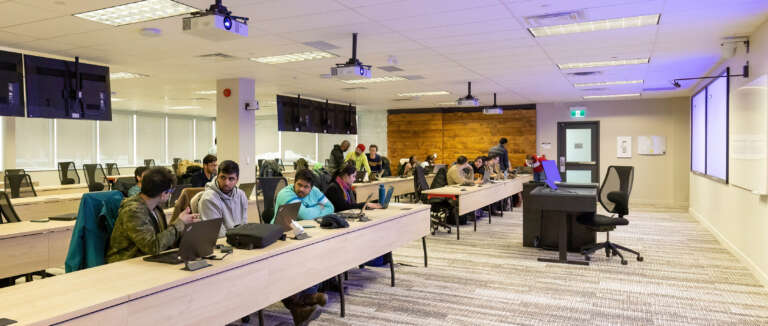
At the CSL, a six-year graduate training program known as SECURE-AGRO funded by an NSERC CREATE grant is preparing the next generation of highly qualified personnel who understand both cybersecurity and agri-food. Trainees are paired with mentors, answer calls, attend hackathons and work on research projects ranging from AI security to deepfake forensics.
Graduate students might be computer engineers who see the needs of the agri-food industry, or they might come from agri-food already, wanting to get up to speed on how they can protect their farms.
All of it supports U of G as a growing hub for cybersecurity and threat response. The University houses Canada’s only Master of Cybersecurity and Threat Intelligence program, which similarly trains about 60 graduates every year, while the Canada Cyber Foundry conducts further cybersecurity research and development.
“There are so many gaps,” Dehghantanha says, “in terms of awareness, in terms of tools and techniques and in terms of understanding the impact of cyberattacks. This program tries to build the resilience Canada needs. We hope to expand it to all universities in the coming years.”