
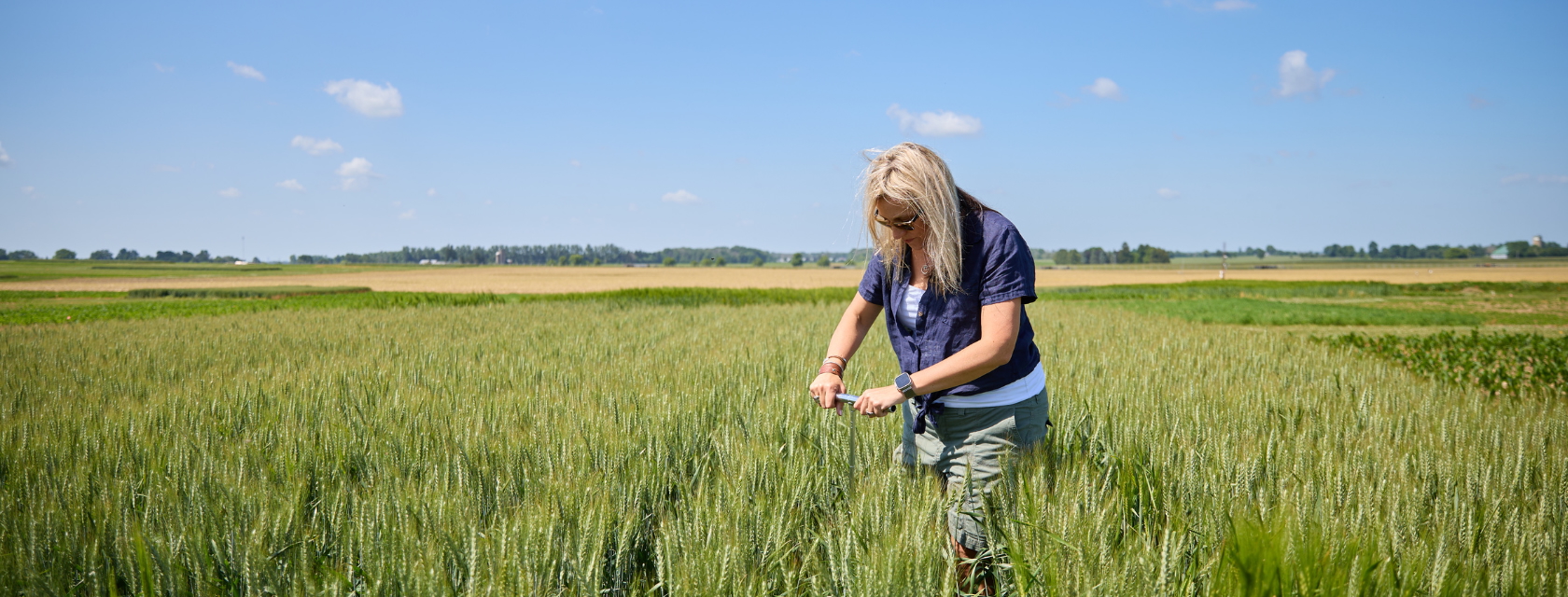
A University of Guelph researcher has received government funding to help Canadian farmers grow wheat using fertilizer more efficiently while strengthening soil health and the wheat microbiome.
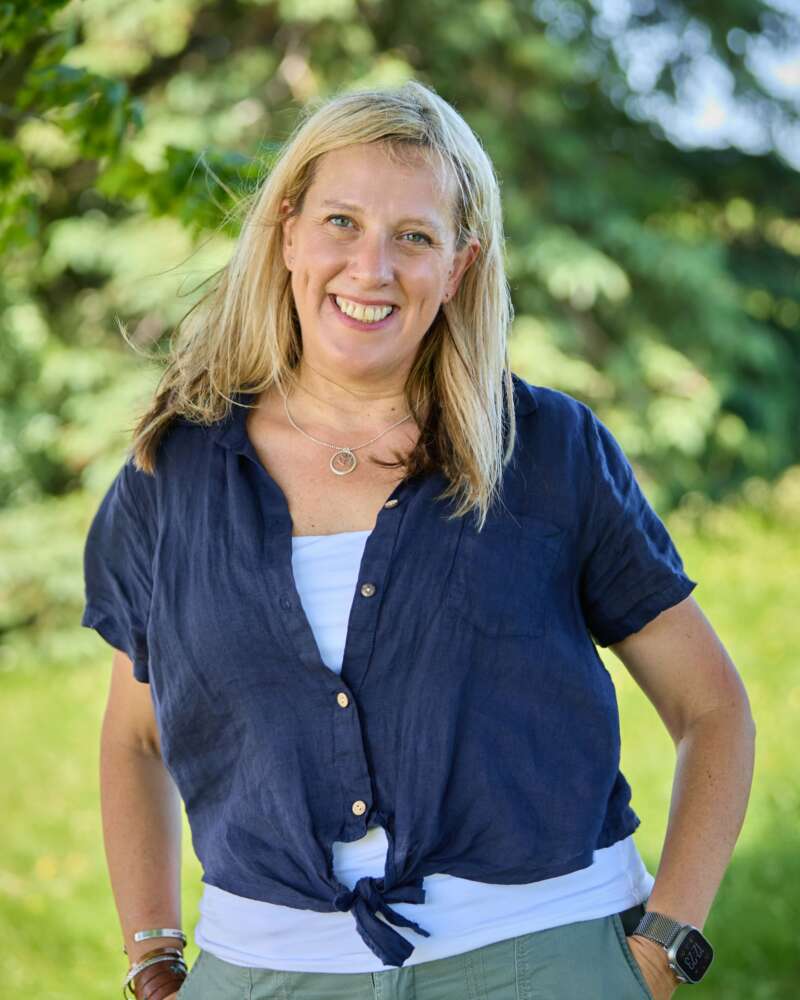
Dr. Kari Dunfield, professor in the School of Environmental Sciences, Ontario Agricultural College (OAC) has received $3,920,000 from the Natural Sciences and Engineering Research Council (NSERC) Alliance Advantage program. The governments of Canada and Ontario, as well as industry partners contributed an additional $1,960,000 in funding and $143,695 of in-kind support.
“Collaboration between academia, industry and government is critical for developing innovative, sustainable solutions to complex agricultural challenges,” says Dr. Shayan Sharif, interim vice-president, research and innovation.
“We thank the federal government for supporting this collaboration through NSERC, along with government and industry partners, which will help Dr. Dunfield and her research team advance new approaches to improving nitrogen efficiency and environmental sustainability in Canada’s wheat sector.”
Guelph MP Dominique O’Rourke said: “This investment brings together the strengths of our researchers, producers, and industry partners to make one of Ontario’s most important crops more sustainable. Dr. Dunfield’s leadership will help farmers use nitrogen more efficiently, reduce environmental impacts and strengthen the sustainability of our agri‑food sector. This is exactly the kind of collaborative, practical innovation that keeps Ontario growers competitive while supporting the transition to a cleaner, more resilient future for Canadian agriculture.”
Tackling nitrogen waste in wheat production
Nitrogen fertilizers are essential for crop growth but can have significant environmental impacts when overapplied, as well as increased production costs.
Dunfield and her team will test sustainable nitrogen management strategies by combining agronomy, precision technology and wheat microbiome science. The research team includes Drs. Adrian Correndo, David Hooker and John Sulik from the Department of Plant Agriculture and Dr. Claudia Wagner-Riddle from the School of Environmental Sciences.
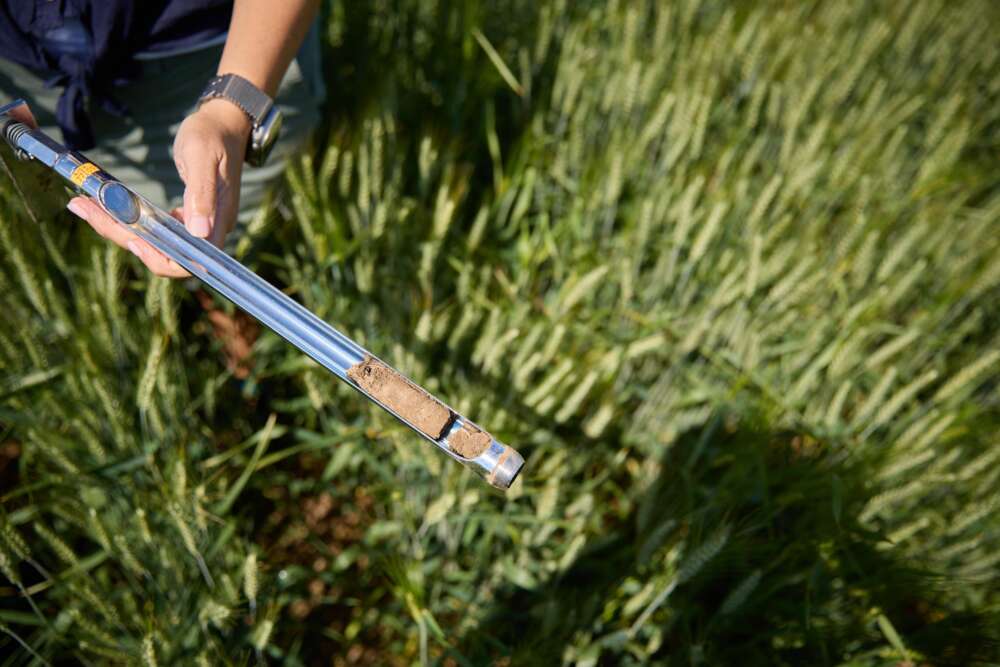
Their goal is to improve nitrogen efficiency through more efficient use of fertilizer inputs and enhance soil health, while maintaining grain quality for baking.
The focus will be on soft red winter wheat, a key ingredient in baked goods prized for its low protein content, ease of milling and high flour yield. Multi-year field trials will evaluate nitrogen rates, timing, sources and protective strategies, while also investigating beneficial microbes to naturally enhance nitrogen cycling and crop resilience.
This research will take place at the Ridgetown and Elora sites of the Ontario Crops Research Centre as well as farm sites, maximizing the value of existing trials and ensuring findings are relevant to real-world farming conditions.
Continuity and collaboration deliver real-world impact
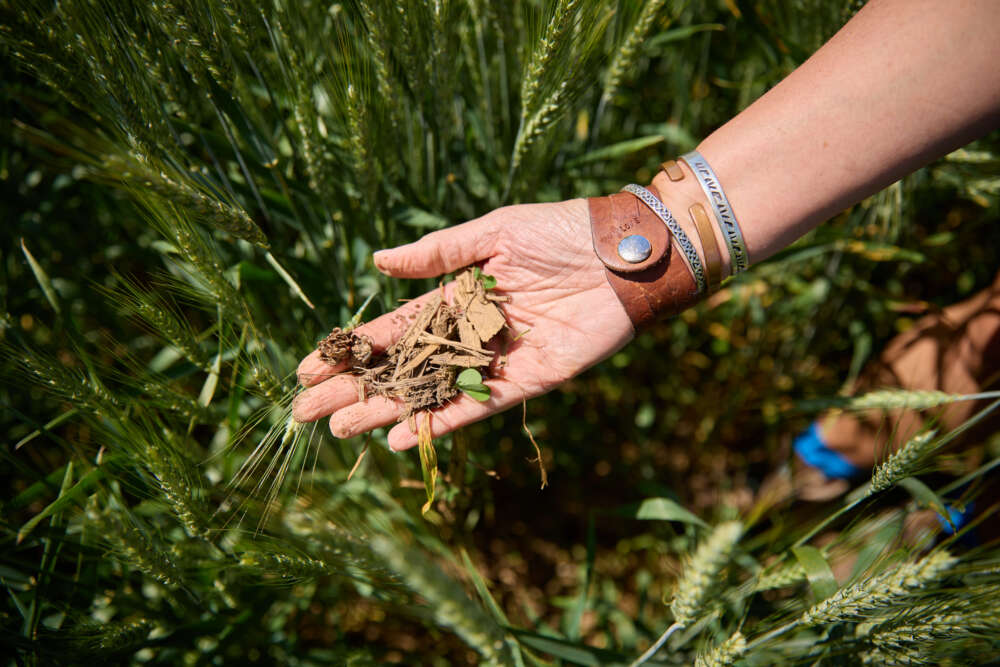
Building on previous research by Dunfield and Hooker at Ridgetown Campus, this project will also use learnings from long-term trials supported by the Ontario Agri-Food Innovation Alliance, and the applied research project on the soil microbiome funded under the Ontario Agri-food Research Initiative through the federal-provincial Sustainable Canadian Agricultural Partnership, to conduct a coordinated, multi-dimensional study of nitrogen management in wheat.
“Many trials measure yield, greenhouse gases or soil microbes separately,” says Dunfield. “What’s unique here is that we’re collecting all these measurements on the same plots at the same time at multiple field sites. This allows us to analyze interactions scientifically rather than just observing trends. It’s a much more rigorous and efficient way to understand what really drives sustainable wheat production.”
Dunfield says having reliable, integrated data provides a critical foundation. Turning those insights into practical improvements requires meaningful collaboration.
“Our partners, from farmers to the food industry and its consumers, care about different aspects of wheat production. By working across the supply chain, we can develop solutions that are both scientifically sound and realistic for farmers to implement while ensuring food companies can continue producing high-quality baking products that people know and love,” she says.
Dunfield’s partners agree.
“Mondelēz Canada is a long-standing and trusted partner within Canada’s agri-food sector, and as a top ten Canadian food company, we are committed to sustainable baking,” says Lindsay Moore, head of research & development, Mondelēz Canada.
“As major users of Ontario wheat, regenerative agriculture practices help reduce greenhouse gas emissions and improve soil health while helping to advance practical farming solutions. We are proud to invest in this partnership, which further strengthens Mondelēz Canada’s R&D collaboration with Canadian universities and Grain Farmers of Ontario to help enable scalable wheat solutions in Canada.”
“Grain Farmers of Ontario is proud to invest in research that delivers meaningful results for our farmer-members,” says Paul Hoekstra, vice-president, strategic development, Grain Farmers of Ontario. “This project will advance the environmental sustainability of soft red winter wheat production while ensuring farmers continue to deliver the high-quality grain customers depend on. By supporting collaboration between researchers and industry partners, we’re ensuring innovation is grounded in real on-farm challenges and focused on practical outcomes that matter to our members. This work will help ensure Ontario’s wheat sector remains strong and well-positioned for the future.”
“The work of Dr. Dunfield and her research team will deliver solutions to farmers that increase efficiency and drive sustainable growth in Ontario’s wheat sector,” said Trevor Jones, Minister of Agriculture, Food and Agribusiness. “Our government is proud to invest in made-in-Ontario research that supports farmers and protects our food independence.”
Alliance Advantage grants support collaborative research partnerships between university researchers and organizations in the private, public and not-for-profit sectors. Projects funded by this stream help translate academic research into real-world solutions with economic, environmental and societal benefits.
The Ontario Crops Research Centre is owned by Agricultural Research and Innovation Ontario and managed by the University of Guelph through the Ontario Agri-Food Innovation Alliance, a collaboration between the Government of Ontario and the University of Guelph.
This research is funded in part by the Sustainable Canadian Agricultural Partnership (Sustainable CAP), a five-year, federal-provincial-territorial initiative.