
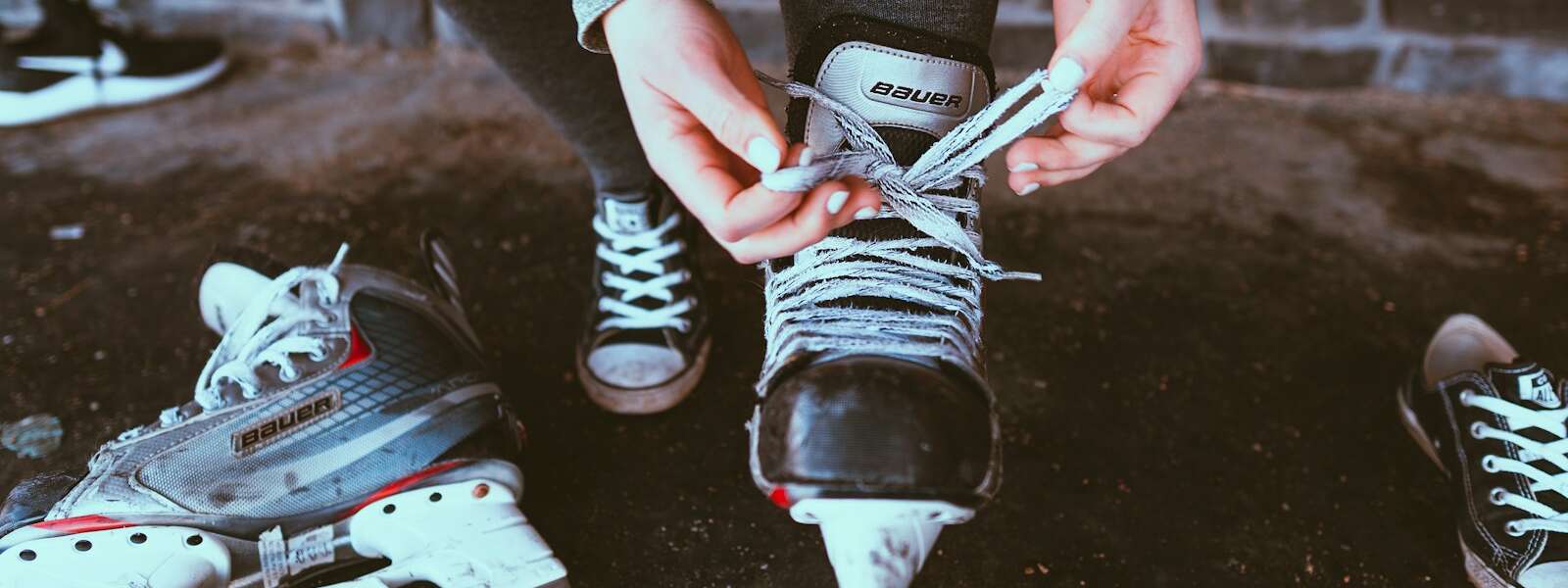
Heated Rivalry, the groundbreaking new Canadian television show that tells the story of two LGBTQ2IA male hockey players who fall in love, is creating visibility on the screen and driving a renewed call for inclusivity on the ice, says a U of G sport researcher.

The series, a Crave original, is doing something no television show has done before – featuring two lead male characters who are LGBTQ2IA and who play professional hockey.
“Canada is leading the way in creating this visibility through the series and the novel,” says Dr. Ann Pegoraro, Lang Chair in Sport Management and professor in the Department of Management.
The show, based on a series of best-selling novels by Canadian Rachel Reid, is also carving space for Asian men on screen and in hockey, a sport as notorious for its exclusivity as its Canadiana.
“For Heated Rivalry to not only showcase queer culture in the context of men’s professional hockey, but to also have one of the main characters be Asian is huge,” Pegoraro says. “This provides an additional layer of complexity to him in addition to navigating his sexuality.”
Breaking down homophobia in sport
To the extent that a television show can help reshape the face of hockey to be a more welcoming, inclusive and safe environment for queer players of any age or gender remains to be seen, Pegoraro says.
But the conversation has begun and is flourishing on social media, evidence there is a relatability to the story that is connecting viewers. Pegoraro’s research includes digital media, gender equity and sport consumer behaviour, particularly how different forms of media can be used to connect sports fans and athletes at all levels.
“The key is that the series is humanizing queerness in hockey,” says Pegoraro. “Using relatable characters who are positioned as stars in the game, not bench players, and crafting narratives around these men as through the emotions and experiences portrayed, is such an important step to breaking down homophobia in sport.”
In the women’s game, the PWHL is embracing queer players and fans alike, creating a model for how the men’s game can build inclusivity into a league. “Women athletes have learned to be inclusive of all who are fighting to belong,” says Pegoraro, who hopes the increased awareness the show is bringing will serve as a kind of turning point for leagues both professional and amateur.
The key is for coaches and parents to be vigilant as this trickles down to grassroots hockey, to avoid any locker room backlash, she adds. Younger players are undoubtedly seeing coverage of Heated Rivalry on social media, and it is important they know there are safe places to have these conversations.
“Increasing visibility in hockey is needed and for a series like this to provide it will go a long way,” Pegoraro says, noting it is still just one step in shifting the needle of inclusion.
“You can’t be what you can’t see.”
Dr. Pegoraro is available for interviews.
Contact:
Dr. Ann Pegoraro
pegoraro@uoguelph.ca