

The University of Guelph is back for The Royal Agricultural Winter Fair’s 103rd year, showcasing the University’s broad range of research, discoveries and education that have been invigorating Canadian food and agriculture.
From Nov. 7 to 16 at Exhibition Place, Toronto, U of G will be present as Canada’s Food University, a place where innovation is cultivating a healthier, more resilient Canada.
“For more than 150 years, the University of Guelph has been at the heart of Ontario and Canada’s food and agriculture story,” says Dr. Rene Van Acker, president and vice-chancellor.
“Across the agri-food spectrum, our leaders are advancing innovations that grow economies, strengthen communities and promote sustainability – all while educating the next generation of talent.”
He adds, “We’re proud to be at The Royal and invite visitors to stop by our exhibit and discover how U of G research and technology are shaping the future of food and agriculture.”
U of G exhibit highlights wide range of agri-food innovation
At U of G’s exhibit, attendees can engage with the University’s full continuum of discoveries and valuable partnerships with the agriculture industry.
From new inventions to research successes in plant breeding, animal care, honey bee health, food security and everything in between, visitors can learn how U of G researchers are protecting our trees, for instance, or taking care of pollinators.
Other highlights include made-in-Guelph inventions that are building a more resilient agriculture system and ensuring that every Canadian has access to safe and healthy food.
GIGAS, an AI-powered robot, is picking tomatoes and scanning for disease, saving farmers time and money. Cutting-edge technology is safely killing food pathogens in seconds, while avian flu researchers are providing a broad range of public health responses.
Tickets can be purchased now on The Royal’s website.
Education Symposium: Your Future in Food
As the Fair’s presenting education sponsor, U of G will lead the Education Symposium: Your Future in Food. This interactive panel for teachers, guidance counsellors and high school students discusses the growing number of careers and opportunities in the sector.
Student ambassadors from the Ontario Agricultural College will share their personal journeys, highlighting their favourite learning experiences as they study plant biology, food science, marketing, policy development and more.
They will be available to speak to any students interested in studying agriculture and food across U of G’s campuses.
Attend the symposium on Thursday, Nov. 13 at 11 a.m. and 12 p.m. on the Growth Hub Stage.
U of G researchers presenting on Growth Hub Stage
At the Growth Hub Stage in the Enercare Centre, several U of G researchers will share how they are solving real-world challenges in agriculture and food. Check out the schedule to learn more:
Crop Smart, Shop Smart with Dr. Mike von Massow | Friday, Nov. 7, 4 p.m.
From soil to supermarket: how agricultural management training, shopping choices and supply chains feed the future.
The Buzz About Bees with Dr. Paul Kelly | Tuesday, Nov. 11, 4 p.m.
The University of Guelph‘s apiculture research and education program was established in 1894. Its mandate is to help bees and the beekeeping community thrive.
In this presentation, some of the fascinating aspects of honey bee biology will be described. Then the focus will be on the important role that bees play in food production.
Hive health issues, and the solutions we are working on at the Honey Bee Research Centre, leads into a discussion about the initiatives everyone can consider to benefit pollinators. One solution is to grow trees, shrubs and herbaceous plants that benefit pollinators.
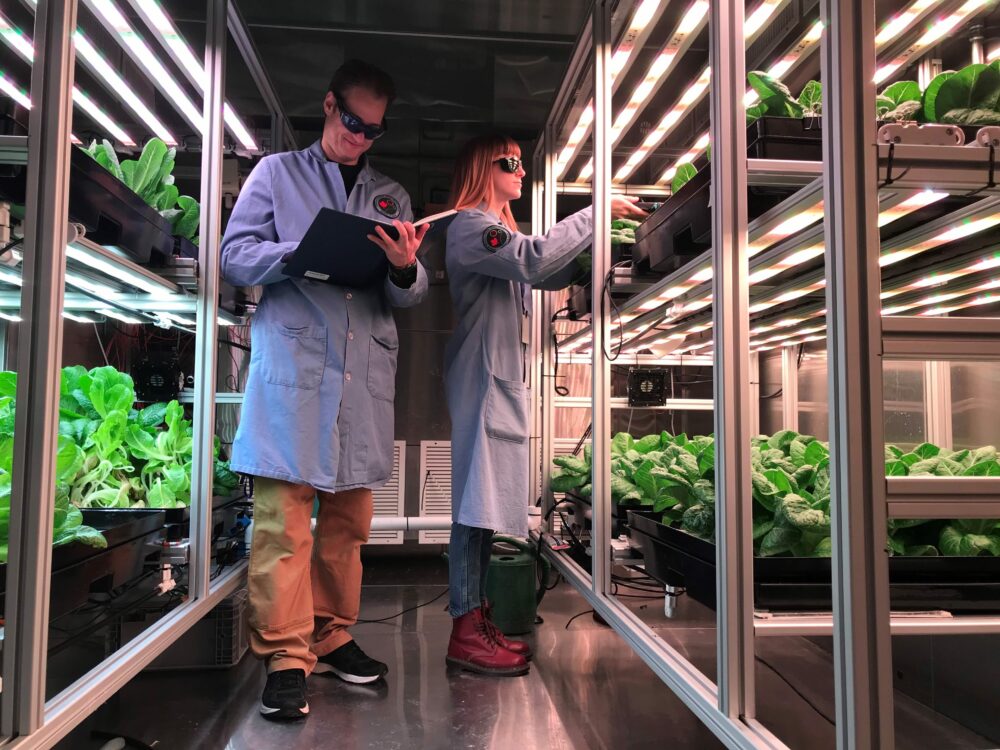
Bringing the Farm Indoors with Drs. Youbin Zheng and Wael Ahmed | Thursday, Nov. 13, 4 p.m.
Climate change, geopolitical tensions, urbanization, pandemics and harsh Canadian winters pose significant challenges to food security.
This presentation will explore how fresh vegetables, fruits and medicinal plants can be sustainably grown year-round in controlled environments, such as greenhouses, to ensure a reliable food supply for Canadians.
Not Just Hot Air with Dr. Christine Baes | Friday, Nov. 14, 4 p.m.
This panel will explore how science and agriculture are working together to breed cows that produce significantly less methane.
What Canada Ate with Dr. Rebecca Beausaert | Saturday, Nov. 15, 3 p.m.
Canada’s culinary history is an amalgam of ingredients, flavours and traditions representing the nation’s diverse population. What Canadians have eaten throughout time tell us a great deal about politics, economics, religion, society and culture.
This presentation will explore how cookbooks can be used as textbooks to study Canada’s vast history through the lens of food.