
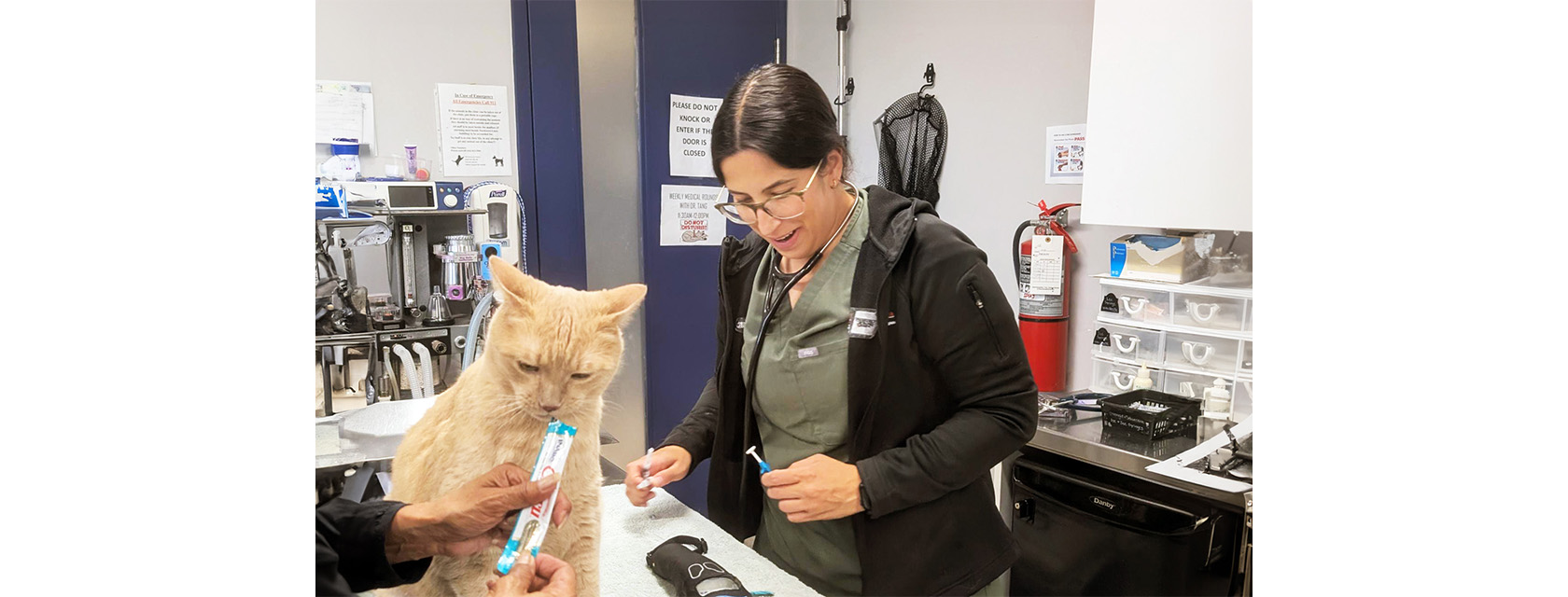
Clinical veterinarian provides urgent care to displaced animals to keep families and together during a crisis.
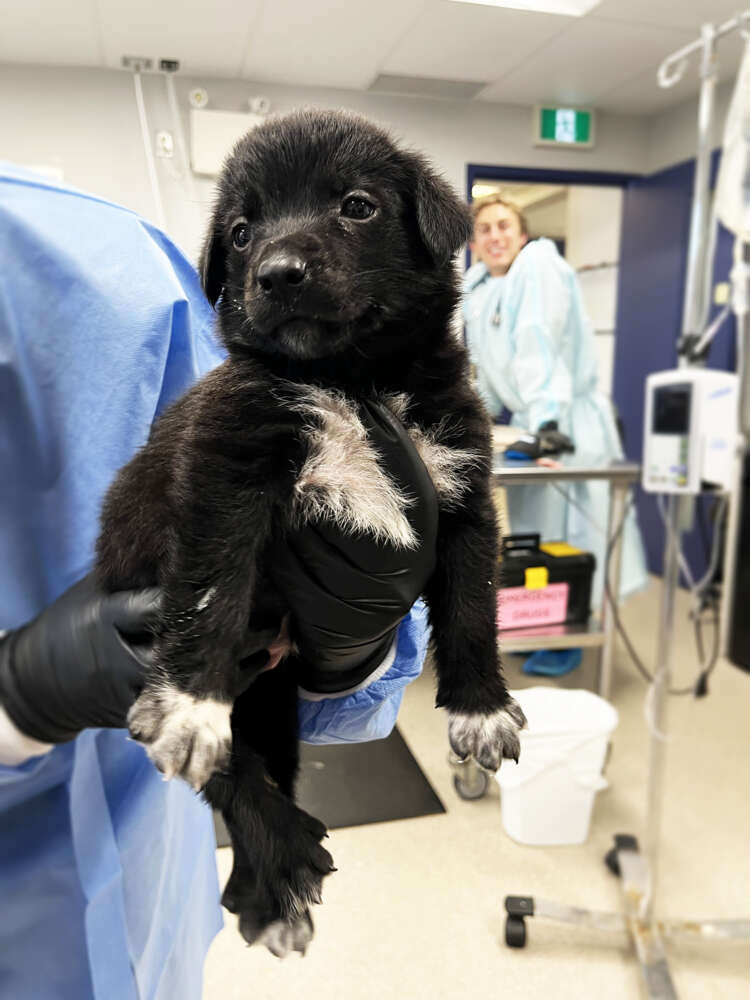
When wildfires forced families from their homes in northwestern Ontario this July, Ontario Veterinary College veterinarian Dr. Jamie Freeman-Braganca was there to help provide essential care to displaced animals.
Freeman-Braganca is a clinical veterinarian with the Kim and Stu Lang Community Healthcare Partnership Program (CHPP), an initiative that brings together veterinarians, veterinary technicians and community partners to provide primary care to underserved areas, Indigenous communities, people experiencing housing insecurities and animals in shelter.
The Ontario SPCA and the Humane Society’s Northwest Animal Centre in Thunder Bay, Ont. asked Freeman-Braganca for veterinary care help for the large influx of animals displaced or surrendered due to the wildfires.
Once on site, she learned that many of the animals were in need of basic care such as vaccinations. Many of the evacuees also wanted spay or neuter procedures for their animal companions, which can have a dramatic impact on animal population once these pets return to their communities.
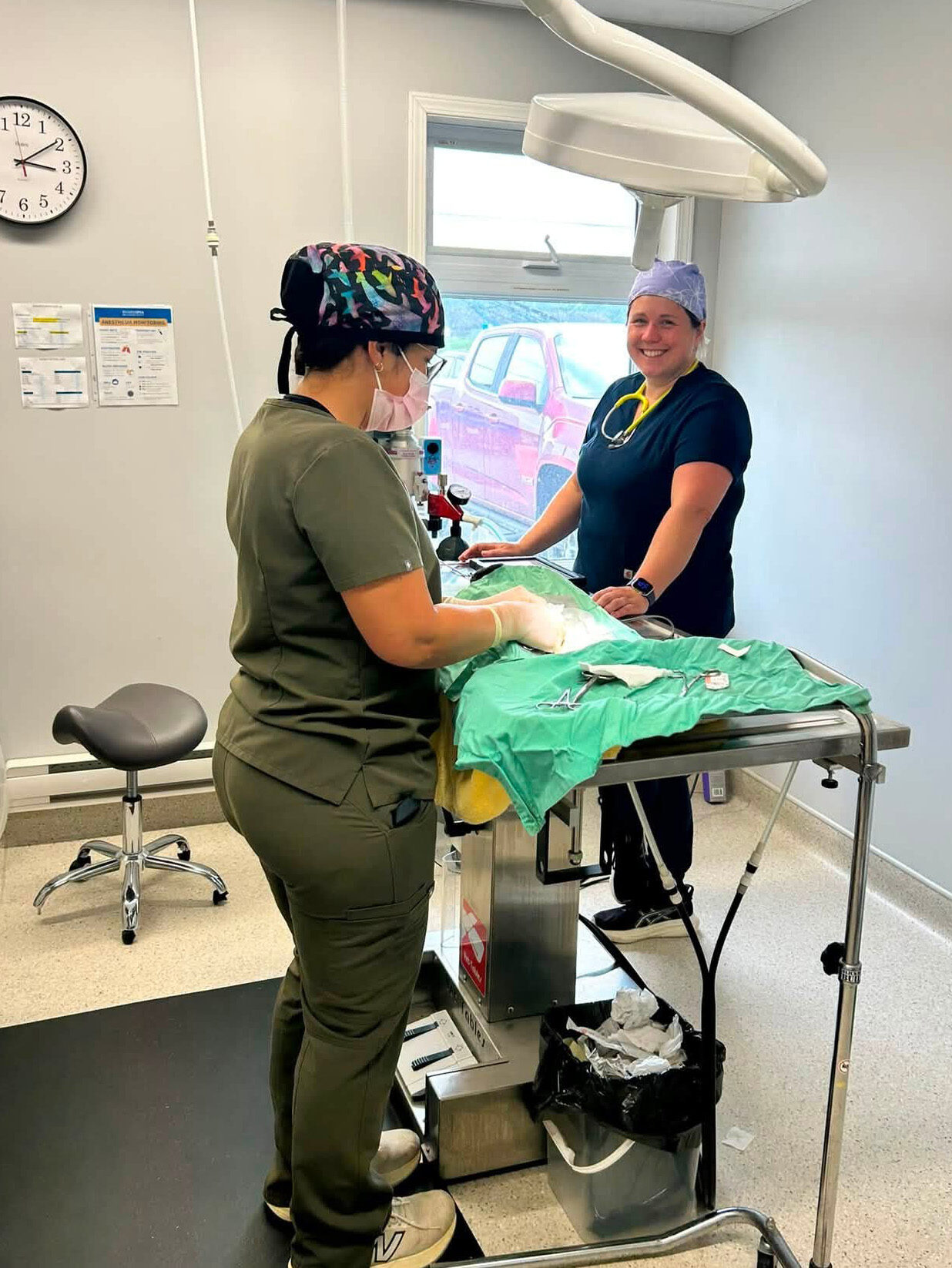
Freeman-Braganca spent six days at the Northwest Animal Centre and was able to assist with 82 spay and neuter surgeries and 103 wellness and vaccine appointments.
Community Healthcare Partnership Program
Providing veterinary services in under-resourced settings is a key goal of the CHPP, which was founded in 2019 through a $11-million donation from Kim and Stu Lang’s Angel Gabriel Foundation, and a a renewed $7-million grant in 2024.
Through the CHPP, OVC regularly collaborates with community partners in northern Ontario, including First Nations, Humane societies, the Ontario SPCA and other animal care organizations, providing community medicine through on-location veterinary clinics and telemedicine.
In 2024, Dr. Wesley Cheung, a shelter medicine resident with CHPP, travelled to Lahaina, Hawaii, to join a team of experts to find unique solutions to sheltering outdoor cats while respecting their unique welfare needs.
U of G and Lakehead University are working to train a skilled veterinary workforce to serve northern Ontario through the Collaborative Doctor of Veterinary Medicine Program (CDVMP), which combines OVC’s internationally recognized veterinary education with Lakehead’s 60-year commitment to northern, rural, remote and Indigenous communities.
Below, Freeman-Braganca offers more about her recent experience providing veterinary care during the wildfires.
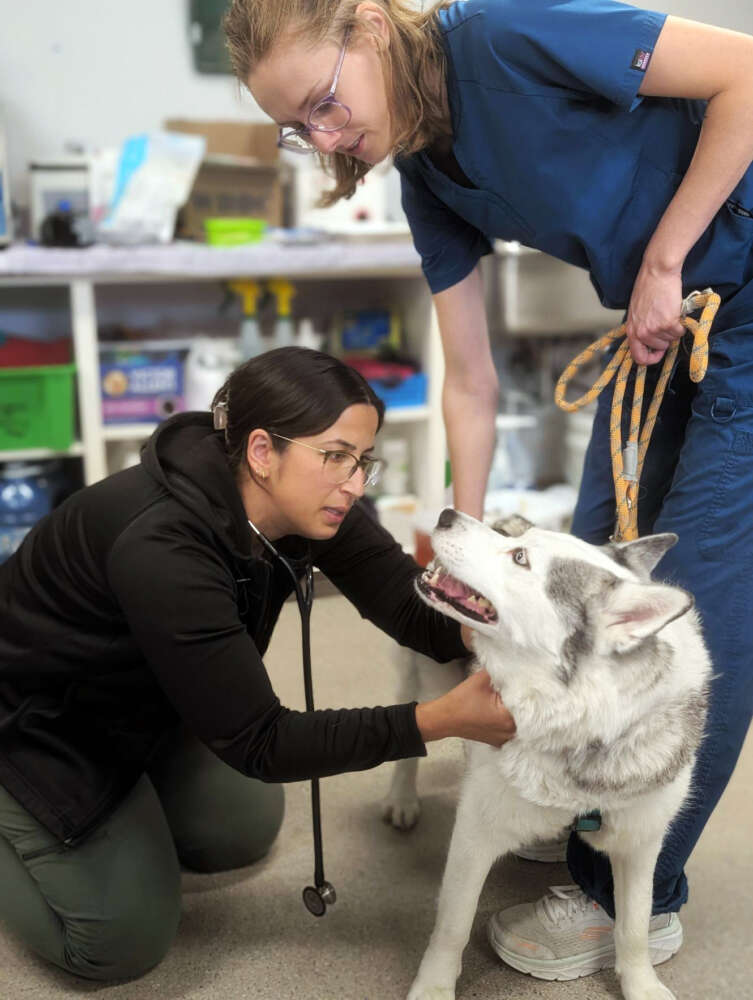
Q&A with CHPP veterinarian Dr. Jamie Freeman-Braganca
Q: What were you invited to do and how did you approach the situation?
JFB: The situation was rapidly developing when I was invited by the Ontario SPCA and Humane Society’s Northwest Animal Centre to help provide veterinary care for evacuated and displaced animals. we couldn’t be sure of exactly what the local needs would be. What we did know was that this region is a veterinary desert, meaning it is a geographic area where accessible, affordable and available veterinary care is limited. The concern was that the need for medical care would exceed local capacity.
My approach to this situation was to listen first and to do my best to gain an understanding of local needs from the folks on the ground. When we asked evacuees what they needed, preventative veterinary care was what was most requested.
Q: What kind of assistance did you provide?
JFB: Some folks had evacuated from communities that had not seen veterinary care in years, and they soon found themselves living in close quarters with other families with animals. Our top priority was to provide vaccinations to prevent disease outbreaks. I also provided spay/neuter services, as these were highly requested.
The shelter was also experiencing an influx of displaced and surrendered animals, and I helped provide medical care and surgery for these animals as well.
This is the perfect example of One Health in action — having access to preventative veterinary care for their pet improves the odds of a family being able to find long term housing.
Q: What were your observations about the experience?
JFB: To see the lengths that people would go to make sure that their pets weren’t left behind was truly a testament to the strength of the human-animal bond.
Keeping families together, including their furriest members where possible, should be a priority during an emergency response. It’s times like these where people need their pets the most..
Q: How does this type of work align with your role with CHPP?
JFB:My role in CHPP is to teach students about shelter and community medicine. Shelter and community veterinarians have long held roles in disaster response, as their understanding of population health, humane sheltering standards and the importance of keeping pets with their people make them uniquely qualified for this task.
This work aligns with our teaching, as our team is responsible for the planning and facilitation of an eight-hour emergency response workshop led by [OVC professor and department chair of clinical studies Dr. Chris Rileyfor Phase III student veterinarians. Our goal was to provide them with an understanding of scalable emergency response frameworks and the role of veterinarians in disaster response.
By nature, emergencies are hard to predict, but preparedness, communication and understanding the needs of all stakeholders are essential to maximizing animal welfare and lifesaving capacity.
Q: Is there anything else you would like to highlight?
JFB: The dedication of the OSPCA Northwest shelter staff who understand the importance of the human-animal bond and who work tirelessly to keep people and pets together is truly incredible. This is work that they do day in and day out and it is only magnified during an emergency.
I hope that, if there is a silver lining to this situation, it is that it shines a light on some of the gaps in access to veterinary care that exist in Northern Ontario. As a profession, our support for our colleagues in the North must continue well after the smoke clears.