
University of Guelph researchers will receive more than $22 million from the Natural Sciences and Engineering Research Council of Canada (NSERC) to advance knowledge that will strengthen environmental resilience, improve human and animal health, and enable smarter technologies.
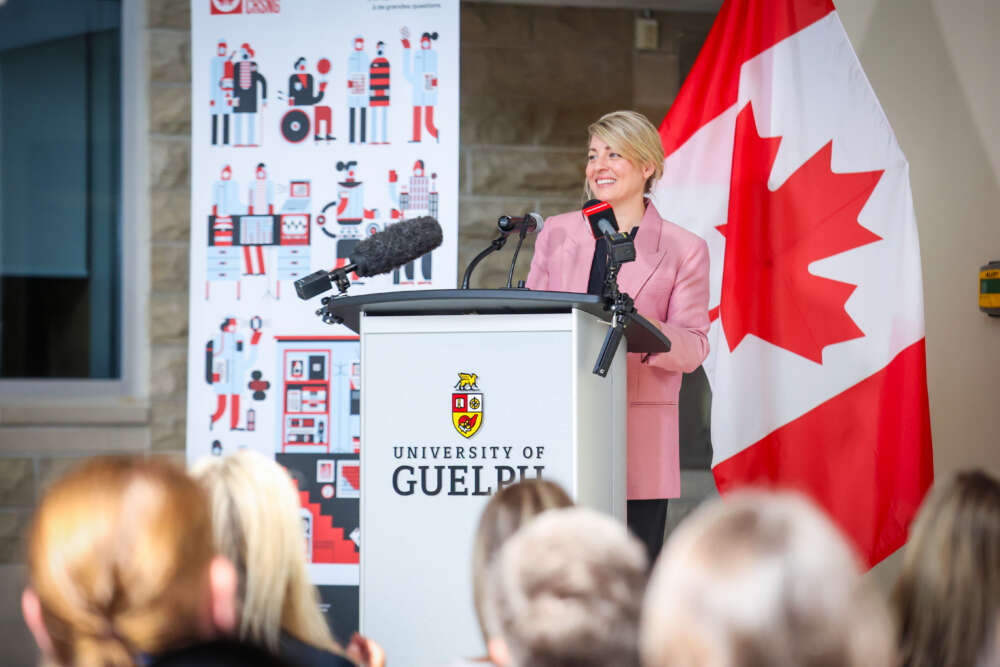
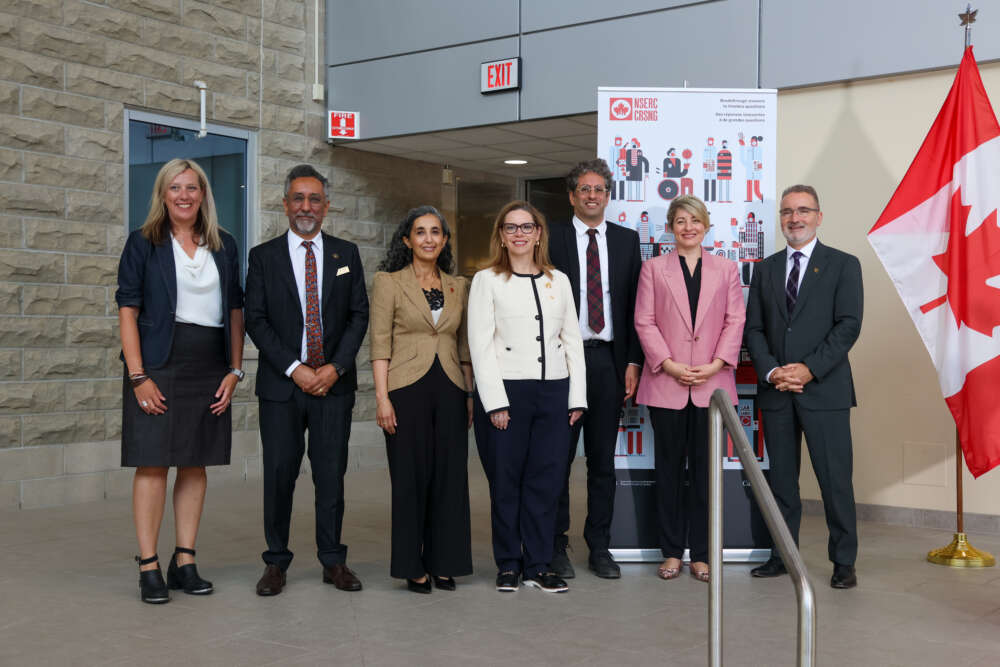
This funding is part of a $630-million investment in discovery research, training and talent development across Canada. The funding was announced today at U of G by Mélanie Joly, minister of industry and minister responsible for Canada economic development for Quebec regions, joined by Karim Bardeesy, parliamentary secretary to the minister of industry.
“Canada’s greatest competitive advantage is our people,” says Joly. “By investing in our world-class researchers and innovators right here at home, we are helping turn Canadian discoveries into new technologies, growing companies, and good jobs. At a time of rapid global change we are backing Canadian talent, strengthening our economy, and ensuring Canada remains a global leader in innovation, competitiveness, and resilience.”
“This investment in Guelph scientists supports their essential work and the University of Guelph’s research excellence,” says Guelph MP Dominique O’Rourke. “Investing in science and advanced research reinforces Guelph’s role as a centre of innovation and economic development that supports growth across our community, southwestern Ontario, and Canada. Today’s announcement showcases the strength of our local researchers, and leadership in addressing some of our planet’s most pressing issues.”
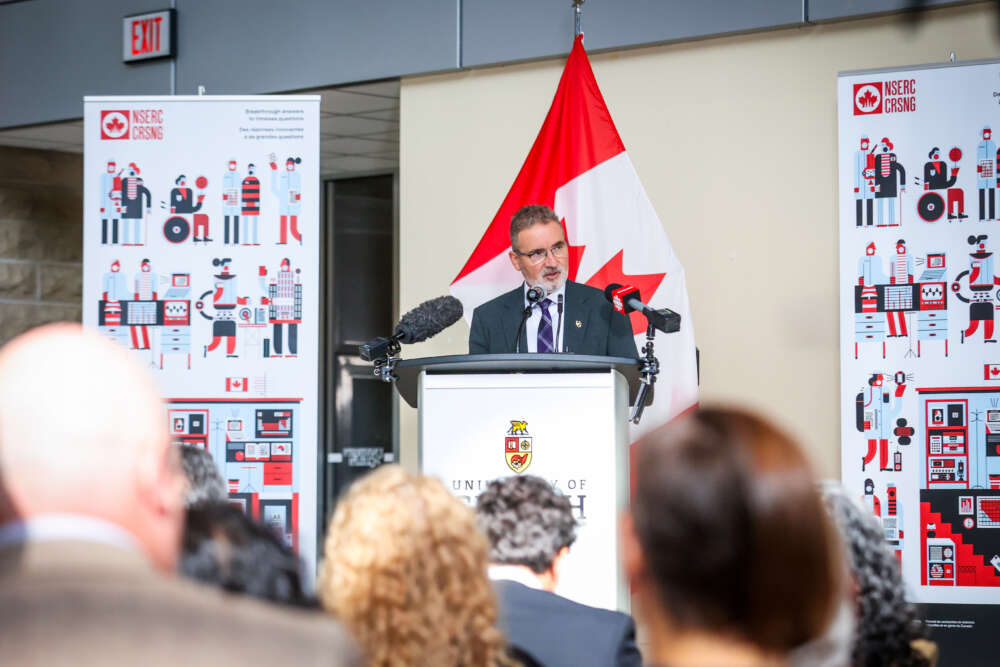
“This investment supports U of G researchers as they advance discovery-driven research in areas shaping health, sustainability and technological innovation,” says Dr. Mazyar Fallah, vice-president, research and innovation. “We are grateful to the federal government for investing in research excellence through these projects, enabling our outstanding researchers to tackle questions whose solutions will improve lives.”
Discovery Grants
In total, 58 U of G researchers will receive $13,465,565 in new, multi-year funding from the NSERC Discovery Grants. Among those recipients, 16 will receive an additional $200,000 in one-time Discovery Launch Supplements valued at $12,500 each, providing support to early-career researchers as they establish their programs.
Discovery Grants support ongoing research projects with long-term goals, enabling researchers to push the boundaries of knowledge and pursue bold, transformative ideas.
Dr. Kari Dunfield

Healthy soils are essential for growing food, maintaining clean water and protecting biodiversity. Scientists increasingly recognize that the bacteria, fungi and other microbes living in soil drive many of the natural processes that keep ecosystems healthy and resilient.
Dunfield, professor in the School of Environmental Sciences, Ontario Agricultural College, will receive $245,000 over five years to investigate how these microbial communities interact with plants and their environment to shape ecosystem health.
By combining field-based research with advanced genomic technologies, Dunfield and her team will explore how soil biodiversity supports critical processes such as plant growth, nutrient cycling and carbon storage, and how these interconnected systems respond to drought and other environmental stressors.
The research will improve understanding of how soil biodiversity influences ecosystem resilience and strengthen scientists’ ability to predict how ecosystems respond to human-driven environmental change, helping inform new approaches to climate change mitigation, sustainable land management and ecosystem restoration.
Subatomic Physics Discovery Grants
Two U of G researchers from the Department of Physics, College of Computational, Mathematical and Physical Sciences will receive $7,250,000 in new Subatomic Physics (SAP) Discovery Grants.
Dr. Alexandros Gezerlis will receive $500,000 over five years for his project: From nuclear forces to novel states of matter.
Dr. Carl Svensson will receive $6,750,000 over three years for his work on gamma-ray spectroscopy at the Isotope Separator and Accelerator (ISAC) with TRIUMF: Canada’s particle accelerator centre.
Research Tools and Instruments Grants
Ten U of G researchers will receive $1,370,604 in funding from the Research Tools & Instruments grants program to support the purchase of research equipment.