
Threats to Ontario’s food supply from tariffs, climate change, cyberattacks and diseases have farmers and agribusinesses on their toes. As they navigate this modern mix of challenges, the University of Guelph is helping them stay nimble and resilient in the face of disruption.
U of G’s collaboration with the Government of Ontario and Agricultural Research and Innovation Ontario(ARIO) through the Ontario Agri-Food Innovation Alliance demonstrates that a commitment to research, laboratory expertise and workforce-ready training can help manage risks, making Ontario’s food system stronger, safer and more sustainable.
“The University of Guelph’s partnership with the Government of Ontario and ARIO drives innovation in agriculture and food—sectors that are strategically vital to Ontario’s economy,” says Dr. Rene Van Acker, president and vice-chancellor at U of G. “Through world-class research, talent development and knowledge translation, we equip growers, producers and industry with solutions that strengthen productivity at home and competitiveness abroad.”
Alliance people, places and programs maximize value for Ontario’s agri-food sector, tripling Ontario’s investment.
“Our partnership with the U of G and ARIO through the Ontario Agri-Food Innovation Alliance is protecting Ontario by securing our food supply,” says Minister of Agriculture, Food and Agribusiness Trevor Jones. “By investing in research and innovation, we are equipping farmers and agri-businesses with modern solutions to stay competitive, expand into new markets, and provide our communities with high-quality, local food.”
Together, the University, the Government of Ontario and ARIO are protecting Ontario’s food system by tackling diseases like avian influenza, defending farms against infrastructure attacks and investing in future leaders.
Anticipate, adapt, mitigate
Amid headlines of highly pathogenic avian influenza (HPAI) H5N1 devastating the poultry industry, U of G researchers are working to predict, prevent and contain it.
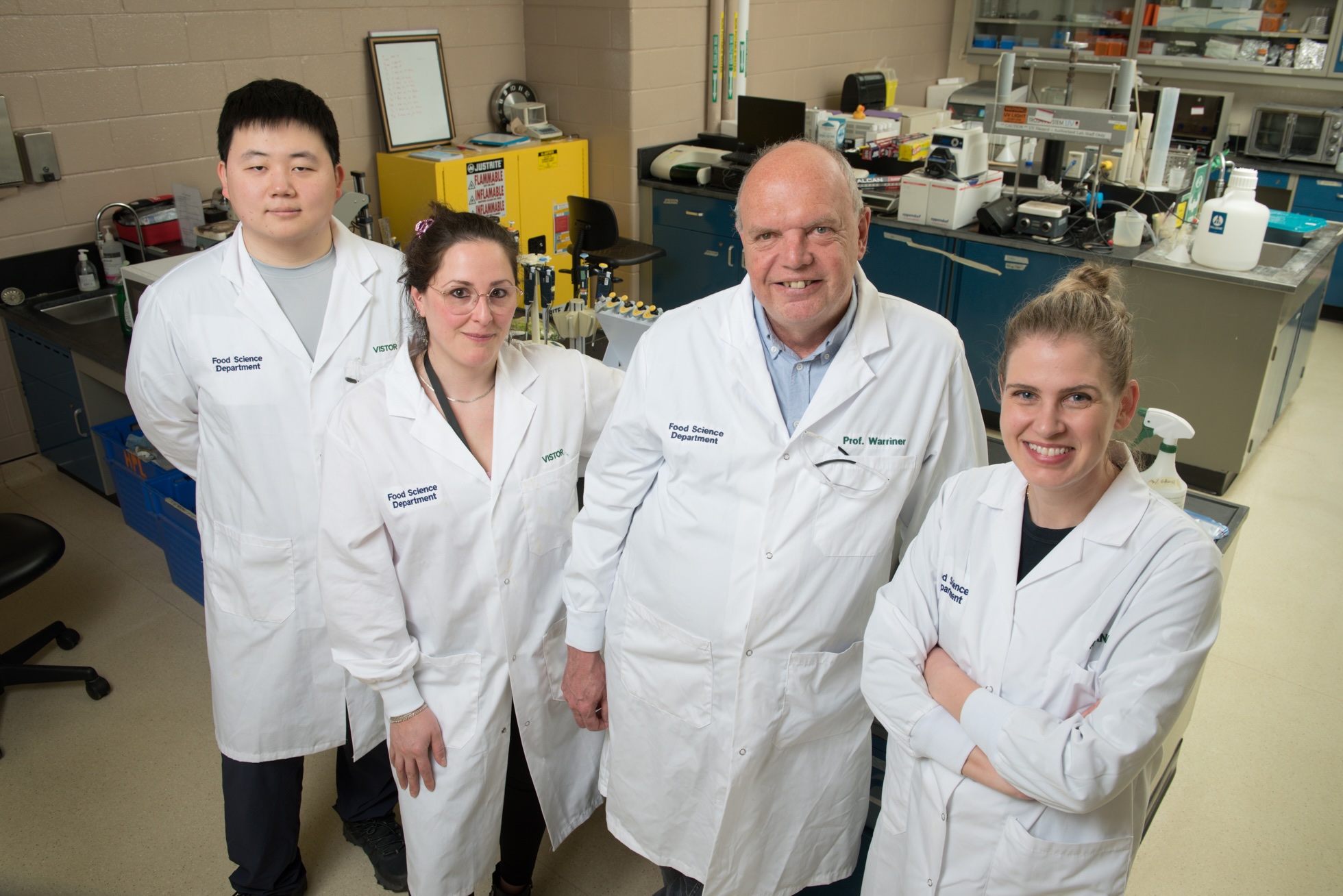
Immunology professor Dr. Shayan Sharif and PhD student Dr. Fatemeh Fazel are developing a cost-effective preventative vaccine for poultry. Sharif is just one of more than 400 expert faculty researchers at U of G addressing pressing agri-food challenges.
More than 300 partners, including the Canadian Poultry Research Council, put their trust in U of G experts in the past year alone. Collaboration is a core value of the Alliance, and researchers work alongside community and industry partners to support the sector.
“We are in a unique position in the research realm in Canada to be working with industry, government and institutions to deliver funding that tackles critical issues affecting the Canadian poultry sector,” says Caroline Wilson, executive director of the Canadian Poultry Research Council. “These partnerships are vital for supporting researchers like Dr. Sharif at the University of Guelph to develop innovative and relevant solutions that will make measurable differences for poultry producers across the country.”
U of G’s depth of research expertise is reinforced by world-class diagnostic and monitoring capacity at the Animal Health Laboratory, where more than 1.1 million tests are completed each year to help protect human and animal health.
Responding to emerging threats
With cybersecurity attacks on the rise in agriculture, the sector is still catching up. With Alliance funding, U of G researcher Dr. Ali Dehghantanha and his team are developing tools to secure the sector’s digital infrastructure and help buffer businesses from the attacks that put more than half of affected companies into bankruptcy.
Their project began with Ontario’s agri-food research centres—a province-wide network of research infrastructure owned by ARIO and managed by U of G. As a test site for digital agriculture solutions and a training ground for industry and government partners, the Ontario Dairy Research Centre provided a space to explore the real risks of cyberattacks to better protect the sector.
The project has earned strong backing from government and industry partners such as Ontario Pork, collaborators who work with researchers to maintain the integrity of Canada’s supply chain.
“Having someone who understands both farming and cybersecurity is a big advantage,” says Brett Leslie, interim manager of communications and consumer marketing for Ontario Pork, the organization representing nearly 1,900 Ontario pork producers. “The tools developed by U of G give commodity groups without a formal program a strong starting point. For Ontario Pork, they help us fill gaps and strengthen what we already offer.”
Building capacity to address future challenges
Investing in the future of food means developing the next generation of leaders.
Nearly 500 students got hands-on training through Alliance research projects in 2024/25, gaining job-ready skills to become future teammates and leaders. A similar number of veterinary students were trained in One Health and food animal care thanks to Alliance programs, building capacity to respond to the needs of Ontario’s livestock producers.
Through Agri-Food Data Canada (ADC), the Alliance is training students to succeed in a technology-driven agri-food sector, creating a solid data foundation ready to be leveraged by apps and artificial intelligence.
Shaping Ontario’s agri-food future
Backed by these successes, the Alliance will continue to focus on proactive solutions for agribusinesses and producers, knowing that investing in innovation now means the ability to respond to new, yet unknown, challenges in the future.
The Ontario Agri-Food Innovation Alliance annual report demonstrates how research builds resilience. Read the report: Growing Ontario Solutions.