
Tuberculosis is one of the world’s deadliest infectious diseases, killing more than a million people every year. Part of what makes the bacterium that causes the disease so difficult to eliminate is its ability to survive the harsh conditions of the human body, including living inside immune cells that are meant to destroy invading microbes.

With widespread resistance to current antibiotics that target processes like DNA replication or protein synthesis, researchers are looking to the bacterium’s stress-response machinery as a potential avenue for new treatments.
New University of Guelph research, published in Nature Communications, sheds light on the workings of the proteasome, the bacterial equivalent of a recycling centre, where damaged proteins are broken down after being selected for destruction.
Because the tuberculosis bacterium is constantly under attack from the immune system, the proteasome is essential to keep these proteins from piling up, interfering with critical cellular processes, and making it harder for the TB bacterium to survive stress.
The “sorting gate” of this recycling centre is a protein complex called Bacterial proteasome activator (Bpa). Exactly how Bpa decides which proteins to grab has not been well understood, in part because Bpa’s natural targets are unstable and difficult for researchers to work with. Yet the central role of Bpa in clearing damaged proteins and helping the bacterium withstand stress has made it an attractive potential drug target against tuberculosis.
“The whole field has been stuck on a basic question: What does Bpa actually ‘see’ when it picks up a target?” says Dr. Siavash Vahidi, associate professor in the Department of Molecular and Cellular Biology and one of the senior authors. “Without that answer, you cannot really design molecules to interfere with it.”
A workaround for a stubborn TB problem
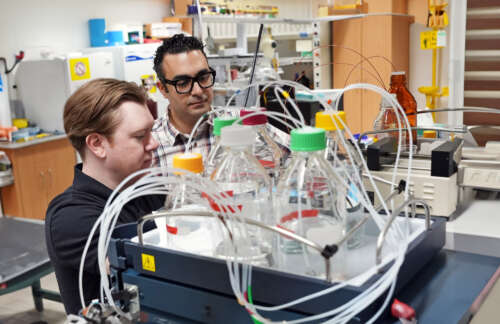
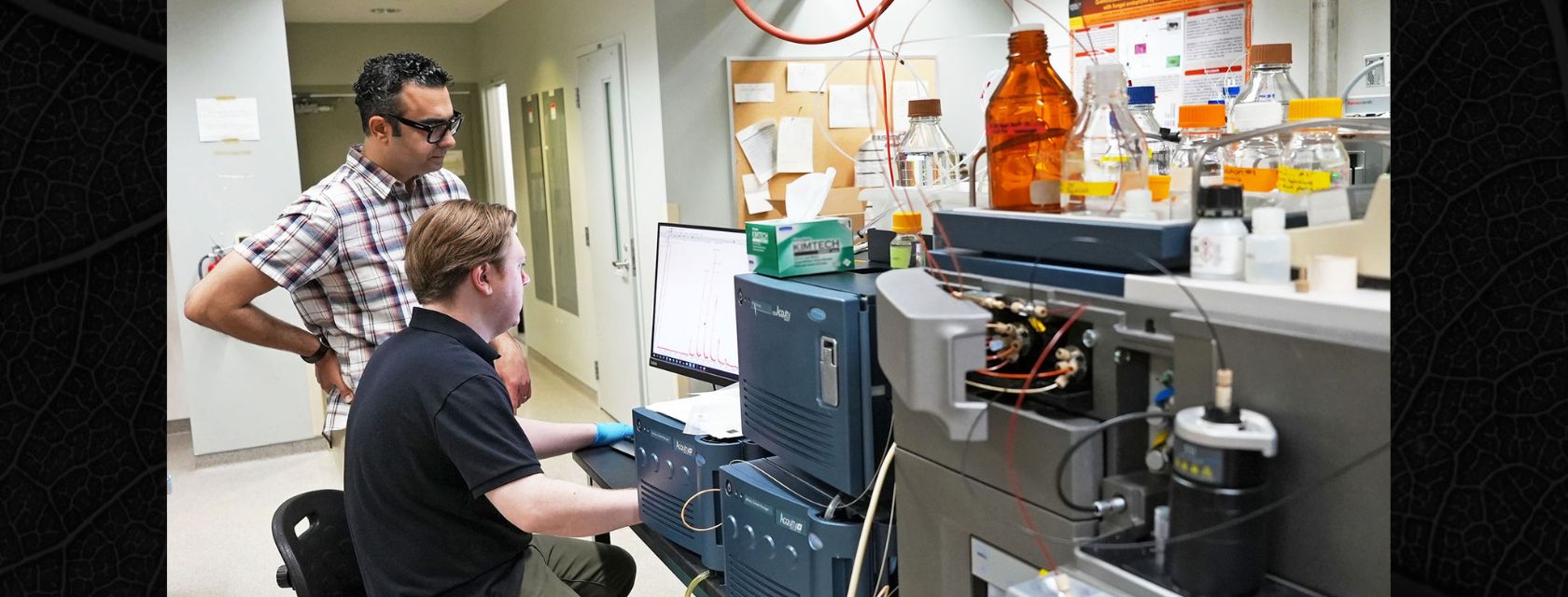
Since the proteins that Bpa targets are difficult to isolate and study, Bradley Davis, a PhD candidate and lead author of the study, took a creative approach. He engineered a model Bpa substrate using a piece of human protein. Using a specialized type of Nuclear Magnetic Resonance (NMR) spectroscopy, the research team was able to map, at a near-atomic level, how Bpa recognizes target proteins and reorganizes into its active form in response to stress.
The findings suggest that under warmer, more stressful conditions, such as inside immune cells, the Bpa complex assembles from smaller inactive units into a ring-shaped structure that is better equipped to grab proteins and send them to the proteasome to be broken down.
The researchers believe this ability of Bpa to shape-shift in response to stress may be crucial for helping the bacterium survive in the human body.
Bpa can recognize target proteins by identifying exposed “greasy” patches, which are normally found inside healthy proteins but can become exposed when proteins are damaged or stressed.
“Once you know what Bpa is looking for, you can start thinking about how to fool it or block it,” Davis says. “That’s the kind of mechanistic detail that drug designers need.”
Implications for future tuberculosis treatment
Vahidi says that the new findings open the door to a different kind of antibiotic, one that may not kill the bacterium outright but instead disables its stress-response machinery. If future drugs were able to trap Bpa in an inactive state, it would reduce the bacterium’s ability to handle stress in the human body, leaving it vulnerable to the immune system.
Treating tuberculosis typically requires six to 12 months of antibiotics, and the bacteria’s growing resistance to the limited arsenal of available antibiotics makes the process even more challenging. New treatments are urgently needed.
“This is the long game,” says Vahidi. “But if we can interrupt how the TB proteasome chooses what to destroy, we can interfere with how the bacterium copes with the immune system. That’s exactly where drug-resistant strains are at their most vulnerable.”
The work was a collaboration between the Vahidi lab, Dr. Lewis Kay’s lab at the University of Toronto, and scientists at Waters Corporation, who provided access to state-of-the-art mass spectrometry instrumentation.
“It took a team,” Vahidi says. “Brad pulled together techniques that almost never appear in the same paper, and our collaborators made it possible to ask questions that we simply could not have asked alone.”
Research funding was provided by the Canadian Institutes of Health Research and the Natural Sciences and Engineering Research Council of Canada.