
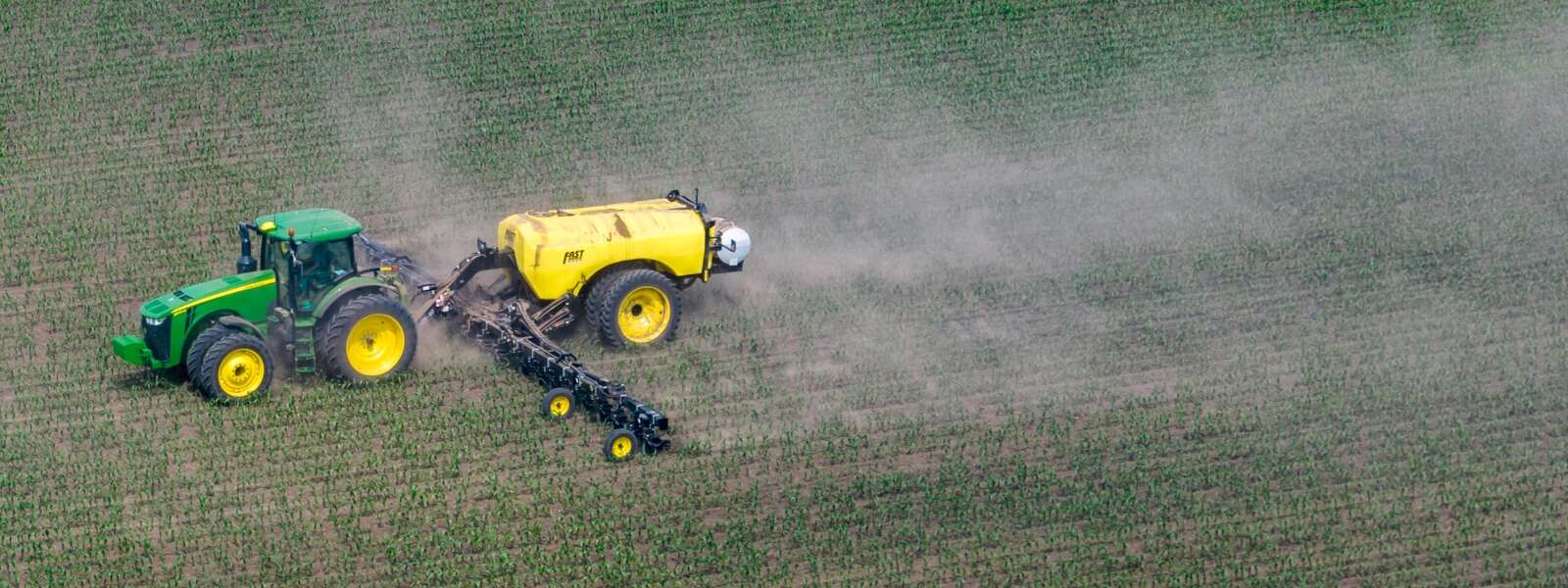

As fertilizer costs spike in response to global unrest, a University of Guelph agriculture professor says exploring more efficient fertilizer use will help farmers manage price volatility.
Fertilizer costs are directly tied to supply chains, which are currently under threat from wars around the world. While some fertilizers, like potash, are mined in Canada; others rely on global trade and imports from other countries.
Spiking energy costs are also increasing fertilizer bills, according to Dr. Asim Biswas, Canada Research Chair in Digital Agriculture and Ontario Agricultural College Chair in Soils and Precision Agriculture. This is due to the use of fuel in fertilizer mining, production and distribution.
“These prices represent a huge financial risk for farmers this year,” says the soil researcher. “Fertilizer is often the biggest cost for grain producers.”
What’s the solution to combat these rising costs? Biswas says the answer lies in technological advancement to improve the efficiency of fertilizer use.
“The goal should not simply to be to produce more fertilizer, but use it smarter,” he says.
How can farmers accomplish this? Soil-sensing technology, precision agriculture tools and digital decision-support tools can all help producers use the nutrients in fertilizers more efficiently. This will reduce costs and also improve environmental impacts.
Long-term solutions include implementing policy to protect soil health and creating a better understanding of soil nutrients to improve productivity without compromising yields.
“Expanding domestic fertilizer production, supporting innovation in nutrient efficiency, and investing in technologies that improve fertilizer efficiency can reduce vulnerability to global shocks while maintaining high agricultural productivity,” Biswas says.
Discussion of fertilizer use may feel trivial to the average Canadian, but choices made in the field could have a big impact at the grocery store.
“Decisions in the field ripple outward to food prices and supply,” Biswas says. “Farmers must make up their increased costs somehow, and that will trickle down to consumers.”
Biswas recently discussed the global impact of fertilizer costs in a commentary for The Globe and Mail. He is available for interviews.
Contact:
Dr. Asim Biswas
biswas@uoguelph.ca
(519) 731 6252