
Dr. Fiona James’ clinical studies in neurology advance Ontario Veterinary College in unique field
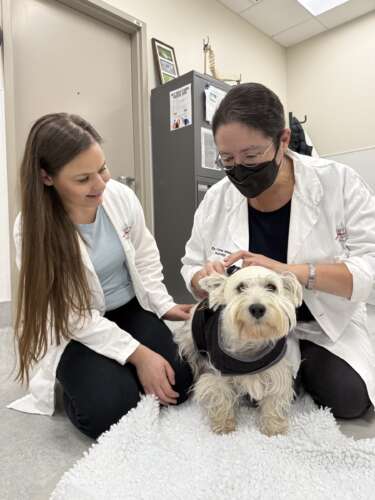
When Judy Rikley first noticed her eight-week-old West Highland White Terrier’s head shaking while she was seated, her initial thought was that it must be tremors.
A caregiver of dogs over multiple decades, she never considered the involuntary movements could be seizures trigged by canine epilepsy.
She had never even heard of epilepsy in dogs.
“We brought Faith home in early November of 2024,” Rikley remembers, “and by the end of December she’d had six episodes of this.”
Rikley tried her local family veterinarian who suggested that Faith’s symptoms seemed like focal seizures. They kept an eye on her. The clinical signs persisted.
Rikley tried not to let anxiety get the better of her, but she knew Faith needed expert care and she knew the Ontario Veterinary College could provide it. “I knew OVC was the gold standard and I just wanted the best for Faith, to give her a happy life.”
In January 2025, Rikley and Faith walked through the doors of the Companion Animal Hospital and were introduced to Dr. Fiona James, a neuroscientist and veterinary neurologist.
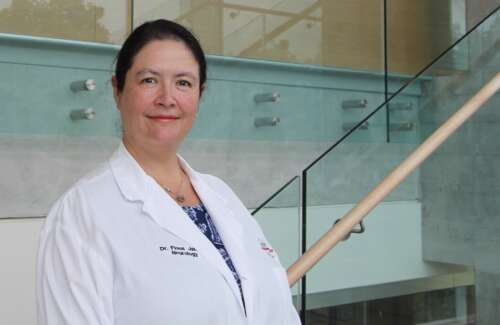
“As a veterinarian, I hate to see a dog suffering and a family in pain because of that,” says James, professor in the Department of Clinical Studies. James, one of only a handful of veterinary neurologists in Canada has enhanced the standard of care at OVC, leading the only research program in the country dedicated to canine epilepsy.
Canine epilepsy is the most common neurological condition for dogs and yet, one that still retains its mystery.
“We don’t fully understand this disease,” says James. “We’re allowing space for things to change as the research evolves.”
Through clinical studies, James is researching multiple paths in canine epilepsy, to improve diagnostics and explore novel treatments. The work is possible because of dogs like Faith, now both a neurology patient and a clinical trial participant.
“It was a privilege for us to be asked to contribute to the study, and to potentially help any other dog who has epilepsy,” Rikley says. “At OVC, you’re not just a number. They truly make you feel that you and your dog are important to them.”
OVC innovation advances brain health
Like in humans, canine epilepsy is a naturally occurring chronic neurological condition that causes unprovoked seizures.
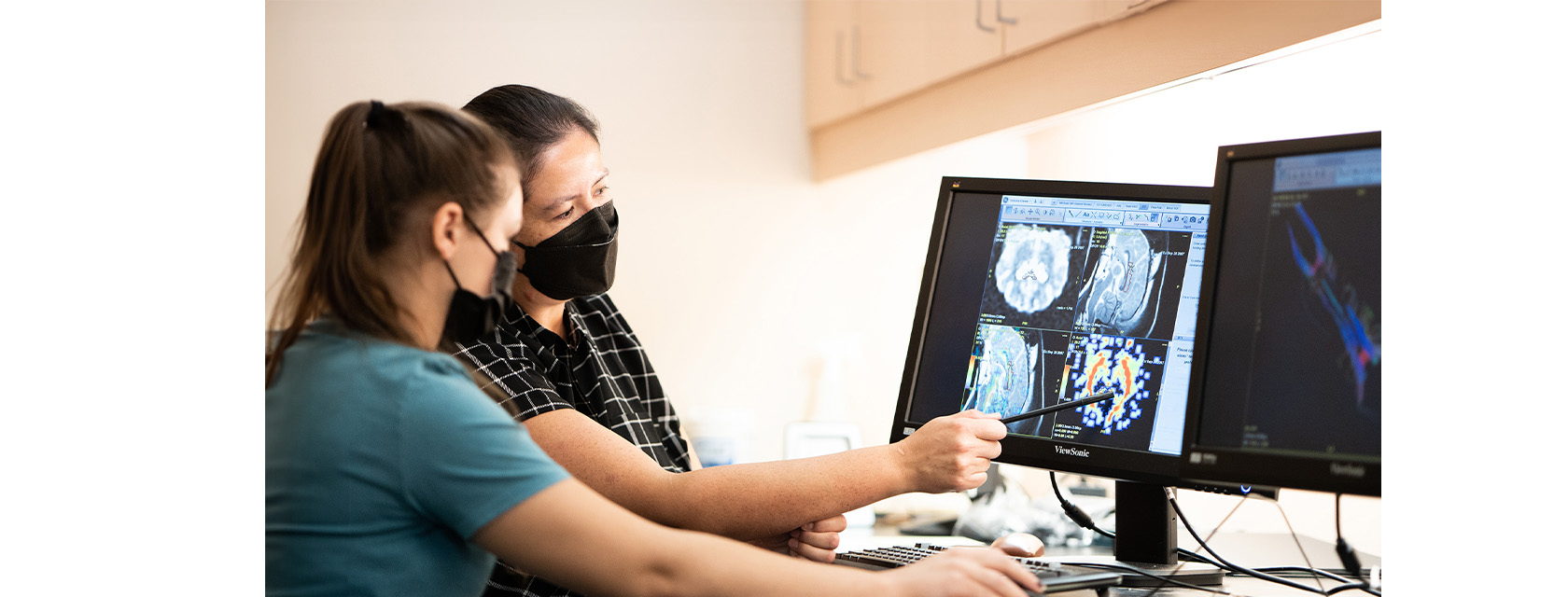
To identify seizures in humans, doctors use electroencephalography, or an EEG, as it is more commonly known. Using small sensors placed on the head, brain activity is recorded and helps doctors map where seizures start with the goal of understanding why they are taking place.
With dogs, EEGs have posed challenges, because the size of their heads vary widely among breeds.
James created virtual 3-D models of dog skulls using scans of bulldogs, labradors and greyhounds. These models have made it possible to test using sensor placements, and a standardization of EEG use for dogs a reality.
In 2017, James was part of an international research team who discovered a gene mutation in Rhodesian ridgeback dogs with a specific type of epilepsy, offering valuable insights into treating the disease in both people and dogs.
This kind of research is vital in the advancement of canine brain health, James says. “Understanding the patterns and locations of seizures in dogs makes more targeted treatments and surgeries possible.”
Faith’s diagnosis of canine epilepsy was possible because she was able to undergo an EEG. The results will help researchers understand how well her anti-seizure medications are working.
While treating patients, James is also leading studies, one on comparative epilepsy, the field of veterinary neurology that focuses on the similarities and differences between how humans and animals experience the disease.
“Clinical trials are vital because they combine leading-edge research with exceptional compassion,” Rikley says.
Another study on idiopathic epilepsy James is working on is exploring vagus nerve stimulation (VNS) as a non-pharmaceutical therapeutic treatment option. Nearly 30% of dogs with epilepsy are drug-resistant. The FDA-approved therapy is already in use for humans with epilepsy.
Transcutaneous cervical vagus stimulation (tcVNS) is a non-invasive, painless procedure that James’ prior work has shown feasible in healthy dogs. It influences the electrical activity of their hearts and brains and could have many applications for dogs with various forms of epilepsy.
“We’re medical detectives,” explains James, who is also studying the underreporting of seizures in dogs. “There is a real satisfaction in finding answers because epilepsy is something that humans and dogs have to learn to live with.”
OVC the top-ranked veterinary school in Canada
The kindness, grace and empathy that James and the other staff at the OVC Health Sciences Centre showed Faith also extended to Rikley and her family. “They’re extraordinary,” she says. “They take extra time with Faith to make sure she is comfortable and not scared. They play music softly to calm her. They answer all your questions, and you never feel rushed.”
Rikley commends Faith’s team for keeping her informed every step of the way, not shielding her from any potential repercussions and empowering her to make informed decisions about Faith’s care.
Faith is a feisty dog by nature, eager to play with her brothers, Rikley’s other dogs, and is friendly with strangers and the folks at a local hospice where she and Rikley volunteer. James and the team continue to monitor Faith and her medications during her regular visits that both she and Rikley now look forward to.
“We’ll always follow the expertise from the team at OVC, but we’re part of their team now too, that’s how they made us feel,” Rikley says. “Everyone is so kind and gracious. We have now seen firsthand why it is number one in Canada and a top veterinary school in the world.”
The research conducted by Dr. Fiona James and her team at OVC is supported by OVC Pet Trust, the American Kennel Club Canine Health Foundation and the Natural Sciences and Engineering Research Council of Canada.