
His PhD project combines microbiome science with Indigenous knowledge, challenging what makes a “healthy” gut
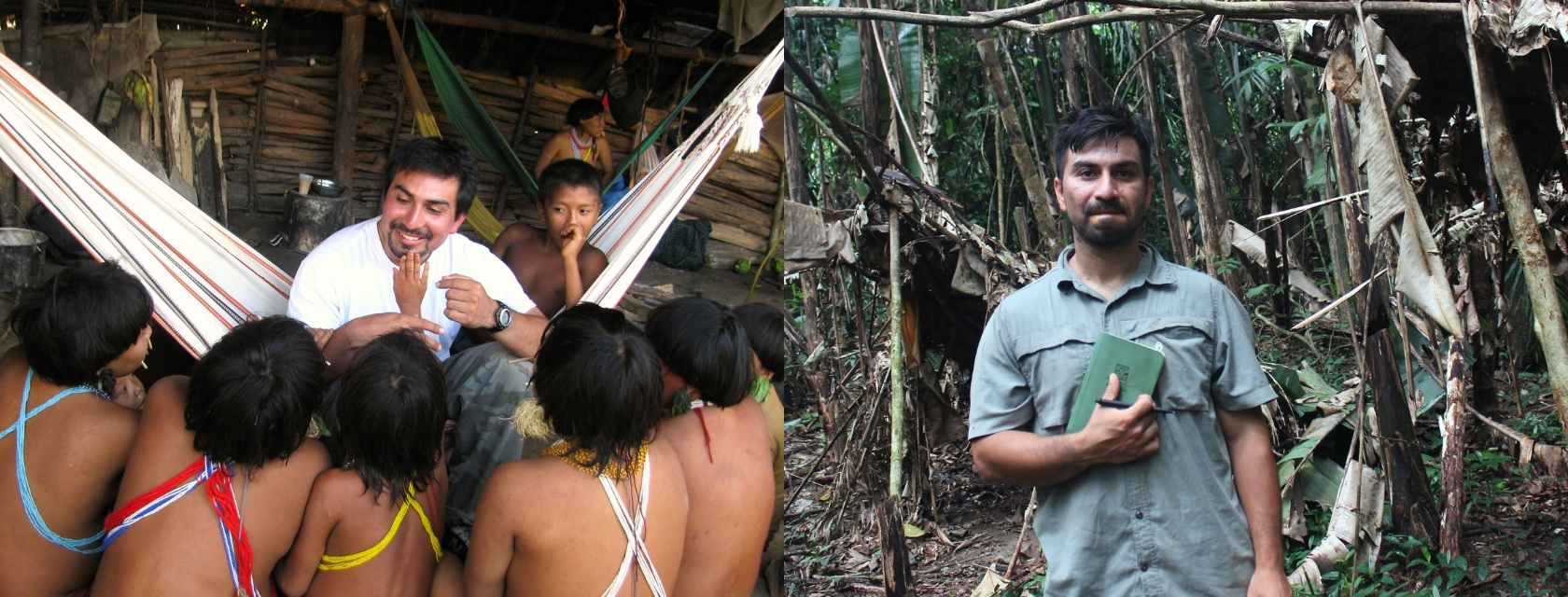
Deep in the Amazon rainforest, David Good calls out to his family members for a strange request.
“Shi-ie ya puhi,” he shouts, which means, “I want your feces.”
Laughing, they comply, tying up banana leaves that contain their samples. They hand these off to Good, who stores the matter in a solar-powered “jungle lab” he purpose built and carried across the Amazon.
“They look at me like the crazy uncle.”
A PhD candidate at the University of Guelph, Good is uncovering the secrets inside the bacteria of the Yanomami people. Drawn to U of G for the opportunity to create a unique interdisciplinary project, he says, Good combines the expertise of global leaders in microbiome science with Indigenous ecological knowledge.
Among the Indigenous peoples of the Amazon, the Yanomami have maintained strong traditional lifeways – hunting, fishing and foraging – despite increasing contact with outsiders. They also have one of the most diverse microbiomes in the entire world; their bodies contain many microbial species yet to be described by science.
But another mystery lies in their remarkably low reported rates of asthma, diabetes, allergies, chronic inflammation and certain cancers. Good believes the microbial communities on their skin play a key role, serving as an extra barrier of protection that imparts powerful health benefits and disease resistance.
“If there’s something from Yanomami knowledge that can support our health,” he says, “we’ll discover it here.”
- Watch: Trailer for Good’s new documentary Wayumi, premiering Nov. 15
Microbiome research, new documentary continue family legacy
Good arrived at U of G in 2021, but the roots of his research reach back to before he was born. In 1978, his father, the renowned anthropologist Kenneth Good, was conducting fieldwork among the Yanomami when he married a member of the village, Yarima. For 12 years, he lived among the Yanomami before moving part of the family to the United States.
Far from her home, however, Yarima would end up returning to her tribe in the Venezuelan Amazon, leaving a profound absence in Good’s life.
That story has been widely shared – on BBC News, in an illustrated book and in Good’s memoir The Way Around. But the latest chapter is found in a documentary premiering this month, Wayumi, which follows Good as he reunites with his mother and fulfills her wish to be with the family once more.
Today, his research project continues the legacy of both parents, a bridge between Western and Indigenous knowledge.
“Microbiome research, for me, is this rich intersection between anthropology, medicine and, of course, molecular and cellular biology,” Good says.
It is a relatively new discipline; still, his project is far from an ordinary PhD. To get to the field, Good takes a flight into Miami, travels to Caracas, Venezuela, and into a small Amazon settlement, La Esmeralda. Some five or six days up the Orinoco River, the team camps in villages, crosses infamously dangerous rapids – the same ones Good’s father capsized in – and searches for his semi-nomadic Yanomami community, frequently on the move.
He often doesn’t know where his mother is until he asks around.
“She’s on the river, or in the jungles,” nearby communities tell him.
“So, it’s not like I can just buy a plane ticket to find her,” Good says.


Good captured with cousin in Yanomami community
Despite these difficulties, the discoveries are well worth it. Good is making rich connections between the Yanomami environment and their social systems, explaining that the Yanomami are a continuation of the natural evolution of the human microbiome. They potentially have microbes once part of our ancestral microbiome thousands of years ago.
He and his colleagues have already identified novel bacterial DNA sequences that make up their skin, challenging the very concept of “healthy” skin while getting closer to characterizing that “shield” that gives the Yanomami their resilience.

Diet is important in that resilience, Good explains. On top of hunting wild animals, the Yanomami constantly eat green plantains, a rich source of fibre that produces beneficial molecules like short chain fatty acids.
“Because of industrialization, our diet, our lifestyle, our overuse of antibiotics, we have lost so much of our microbes that are now extinct in our local ecosystem,” Good says. “But the Yanomami still retain much of their ancestral richness.”
Mental health struggles also seem to be a rarity, he says.
“Their strong social fabric, which is necessary for them to survive, plays a major role in their psychological health, and we know that psychological health is deeply connected to your immune system.”
It is One Health in action, as Good investigates their microbiome while also examining their culture, their environment, their diet, the surrounding animals and plants.
“This is my family’s legacy,” he says. “Even though we’re just discovering these microbes, the Yanomami have evolved in this ecosystem for thousands of years. They have extensive knowledge no scientist could ever have.”
U of G lab ‘cultures the unculturable’
As he travels from Guelph to the Amazon and back again, Good must keep his bacterial samples alive.
When he gets to his lab, he creates a model of the Yanomami’s microbial communities, which takes an environment with no oxygen and specific compounds needed to grow the bacteria.
This is why he decided to come to U of G, to work with Dr. Emma Allen-Vercoe, professor and Canada Research Chair in the College of Biological Science. Globally recognized as a leader in her field and known to “culture the unculturable,” Allen-Vercoe’s lab houses the “robo-gut,” a bioreactor that isolates bacteria from stool samples so that researchers can study and monitor them.
His project has begun amassing a growing library of previously uncharacterized bacterial strains, isolating thousands of them and potentially hundreds of new species the world has never seen.
At this edge of discovery research, however, Good’s unique ethical framework is always front of mind.

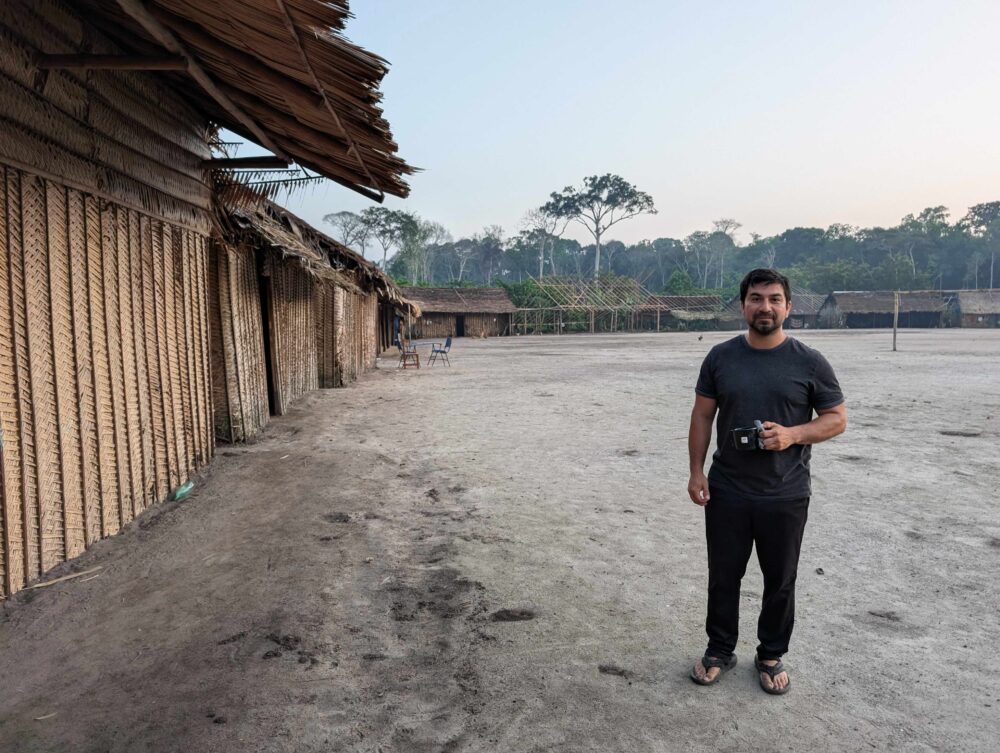
“Many Yanomami communities have voiced frustration with past researchers who came in, took their samples, left and never came back,” he says. “We’re trying to change that whole paradigm, to treat the Yanomami as research collaborators, fellow colleagues and peers.”
In addition to raising donations, The Yanomami Foundation, which Good founded in 2011, helps ensure that any potential benefits derived from the research are directed towards the Yanomami communities involved. The Foundation ensures support for the Yanomami people through the construction of learning centres and other local projects.
“The University of Guelph and Dr. Allen-Vercoe support us as we create this synergy between respecting and incorporating Indigenous ecological knowledge with microbiome research.”
For Good, that is both a personal and academic feat.
“It was hard for me, being separated from my mom,” he says. “But I also appreciate what destiny had called for me to be educated and raised here. Now, I’m in a position where I can complete this vital research, raise resources and funds to support Yanomami projects.”
“I never thought that my calling in life would be to collect my family’s feces,” he adds, “but here I am.”
To learn more about Good’s journey, catch the documentary Wayumi (Grasshopper Film), which makes its world premiere at the DOC NYC Film Festival this November.